
The Pentagon is currently moving quickly to cut through bureaucracy and consolidate resources, so as to empower it with “the utmost authority to outpace our adversaries.”
Source: Department of Defense
Photos: Courtesy
DOD Establishes Joint Interagency Task Force to Deliver Affordable C-sUAS Capabilities to America’s Warfighters
AUG. 28, 2025
Secretary Hegseth announced today, actions the Department is taking to address the growing threat of hostile drones and to enhance its small unmanned systems to protect personnel, equipment, and facilities at home and abroad.

To ensure that American airspace remains secure, Secretary Hegseth directed Secretary of the Army to formally establish the Joint Interagency Task Force 401 (JIATF 401) — a new, unified team that will bring together our best talent from across all agencies to counter these threats and restore control of our skies. The Task Force will report to the Deputy Secretary of Defense, to better align authorities and resources to rapidly deliver Joint C-sUAS (Counter Small Unmanned Aircraft Systems) capabilities to America’s warfighters, defeat adversary threats, and promote sovereignty over national airspace.
“We’re moving fast — cutting through bureaucracy, consolidating resources, and empowering this task force with the utmost authority to outpace our adversaries,” said Secretary Hegseth. “Make no mistake — under this administration and President Trump’s leadership, we will innovate, we will lead, and we will win.”
The Department of Defense is committed to enhancing its C-sUAS capabilities to protect personnel, equipment, and facilities at home and abroad.
The memo is posted here.
Hegseth Calls for Anti-Drone Task Force
Aug. 28, 2025 | By Matthew Olay
Defense Secretary Pete Hegseth announced today that he has directed Army Secretary Daniel P. Driscoll to formally establish a joint, interagency task force to counter hostile unmanned aerial systems, commonly referred to as drones.
“Our job here at the Pentagon — when you think about it — is to prepare for the threats of the future and build a force to match them, and defeat them, and outpace them,” Hegseth said via a video message released to the public.
“And there’s no doubt that the threats we face today from hostile drones grow by the day,” he added.

Noting that hostile UASs are being operated overseas and at our borders while seeking to harm U.S. warfighters, bases and even the sovereignty of the national airspace, Hegseth said the new task force — Joint Interagency Task Force 401 — will be a unified team that will seek to bring together the best talent from multiple government agencies to counter UAS threats and restore control of the skies.
“It’s called counter-UAS — counter-unmanned aerial systems — and America will be the best at it,” Hegseth said.
Although the secretary did not comment on the estimated length of time before the task force will be operational, he did say the Pentagon is currently moving quickly to cut through bureaucracy and consolidate resources, so as to empower it with “the utmost authority to outpace our adversaries.”
He added that DOD is working to deliver real solutions and ensure American airspace remains secure at home, abroad and anywhere troops are stationed.
“They deserve to be defended by the best,” Hegseth said.
He added that the new task force will put the right tools in the hands of warfighters so they can defend the sovereignty of American airspace and “send a clear message” that the United States will “never be outmatched.”
“Because, make no mistake, under this administration — and President Trump’s leadership — we’re going to out-innovate, we’re going to lead and we will win,” Hegseth concluded.
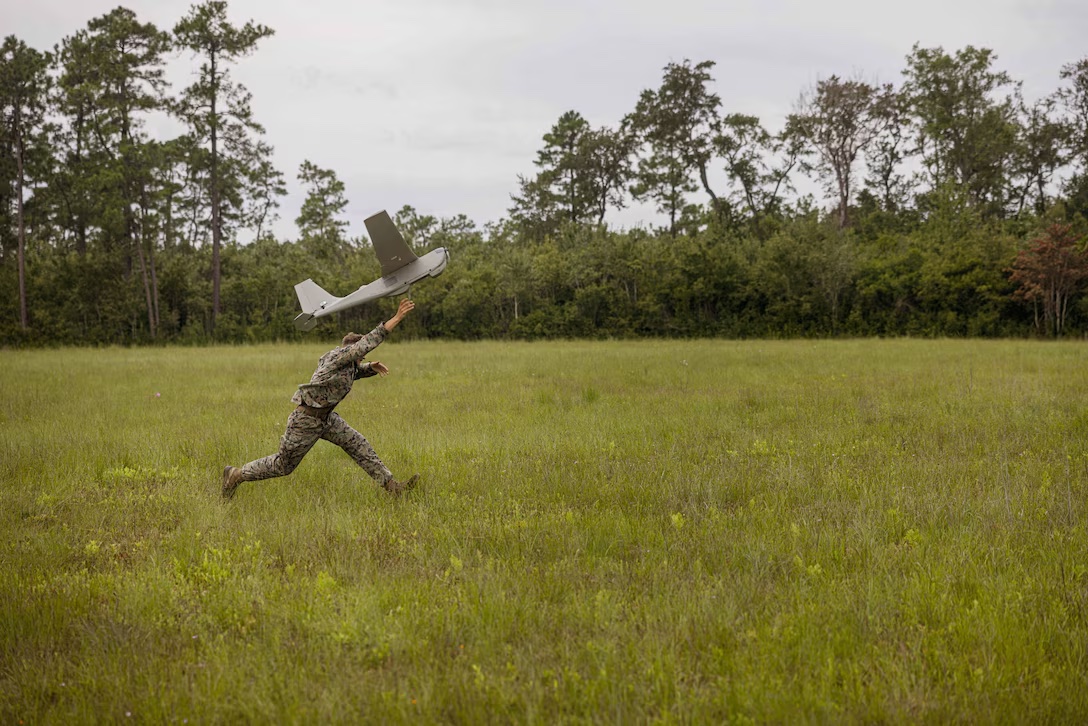
Army Producing Second Tranche of Short-Range Reconnaissance Drones
Aug. 27, 2025 | By Matthew Ryan, Program Executive Office, Aviation
The Army has initiated production of the second tranche of its short-range reconnaissance unmanned aircraft systems, marking a significant step forward in modernizing battlefield capabilities. The Army selected two vendors to manufacture the SRR system, which will equip the Army’s Transformation in Contact units with advanced, networked communication systems designed to address emerging threats.
Initial fielding of SRR tranche one began in September 2022, and, to date, the Army has fielded over 16 brigades with this capability. Critical lessons learned and soldier feedback from tranche one were incorporated into tranche two. This strategy of integrating new technologies into future tranches will continue to provide the best UAS capabilities on an accelerated schedule.

The TiC initiative is part of a broader Army effort to evaluate how personnel, tactics and technologies align to meet the demands of modern warfare. The program manager for uncrewed aircraft systems remains committed to delivering essential equipment to soldiers in time to support the Army’s strategic objectives.
These systems act as force multipliers, enabling precise fires, supporting ground operations with timely intelligence and enhancing operational flexibility and agility. They use cutting-edge sensors to integrate with uncrewed vehicle control, providing real-time intelligence, reconnaissance and target acquisition, empowering commanders with the tools to make rapid and informed decisions.
Additionally, SRR systems continue to improve soldier survivability by detecting threats, identifying safe routes and minimizing exposure to hazards, making them indispensable assets on the modern battlefield.
The Army’s investment in SRR systems underscores its commitment to advanced technologies that improve combat effectiveness and protect soldiers in increasingly complex operational environments.
You must be logged in to post a comment.