
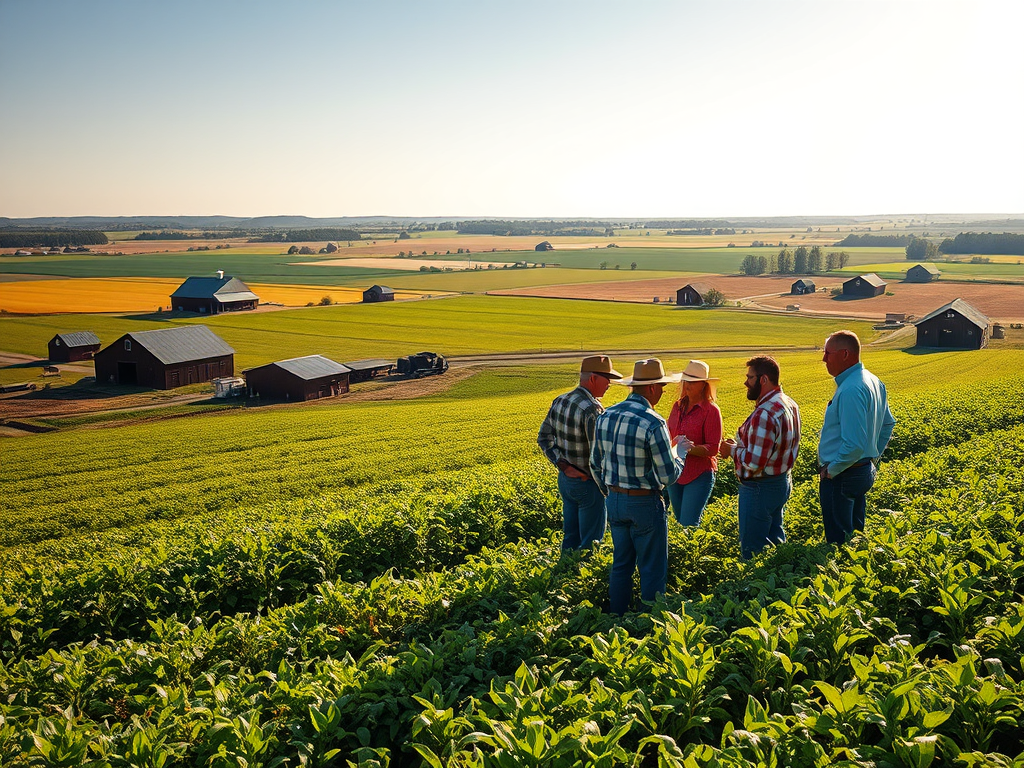
Foreign adversary linked entities currently control at least 277,000 acres of agricultural land in the United States. Each acre represents a threat to our food supply chains…
Source: U.S. Department of Agriculture
Photo: Courtesy

(Washington, D.C., December 30, 2025) – As committed to under USDA’s National Farm Security Action Plan (PDF, 1.2 MB) U.S. Secretary of Agriculture Brooke L. Rollins today announced a number of coordinated actions to continue to emphasize American agricultural research and innovation by ensuring ideas stay in America or among our allies, not with hostile nations and that we are putting American farmers and ranchers first in every USDA program, period.
These historic actions strengthen transparency around foreign ownership of U.S. agricultural land and ensure federal programs and purchasing preferences do not support supply chains controlled by foreign adversaries. The actions include opening up an Advanced Notice of Proposed Rulemaking (ANPRM) on the Agricultural Foreign Investment Disclosure Act (AFIDA) to allow the public an opportunity to comment as USDA moves to improve the regulation and strengthening the implementation of USDA’s BioPreferred Program to ensure federal programs and purchasing preferences prioritize American producers and manufacturers and rid out foreign adversaries.
Receive the latest stories in your inbox every day — FREE!
“Strengthening national security starts with knowing who owns our farmland and where federal dollars are flowing,” said Secretary Rollins. “These actions close long-standing gaps in oversight and enforcement by improving transparency around foreign land ownership and ensuring USDA programs support American farmers and manufacturers, while prioritizing domestic supply chains – not foreign adversaries.”
AFIDA Modernization
AFIDA requires foreign investors who acquire, transfer, or hold an interest in U.S. agricultural land to report such holdings and transactions to the U.S. Department of Agriculture (USDA). USDA’s National Farm Security Action Plan (PDF, 1.2 MB) calls for aggressive implementation of reforms to the AFIDA process including improved verification and monitoring of collected AFIDA data.
USDA seeks input on potential regulatory or other changes that may improve the efficiency and effectiveness of its AFIDA reporting and filing requirements which will result in improved tracking of foreign adversary agricultural land purchases to the public and will further enhance USDA’s Memorandum of Understanding (MOU) (PDF, 164 KB) with Treasury which memorializes cooperation on CFIUS (Committee on Foreign Investment in the United States) cases involving the transfer of agricultural land.
Foreign adversary linked entities currently control at least 277,000 acres of agricultural land in the United States. Each acre represents a threat to our food supply chains, a vector for agroterrorism, and a potential platform for surveillance and sabotage of our military bases and critical infrastructure.
USDA will advance the Administration’s efforts to end market-distorting subsidies for unreliable, foreign-controlled energy sources and strengthen domestic supply chains by updating the BioPreferred and Guaranteed Lending Programs, consistent with USDA’s National Farm Security Action Plan, to protect the integrity of federal purchasing and ensure American producers come first.
BioPreferred Program Updates
The BioPreferred Program supports domestic manufacturing, increases the purchase and use of U.S. biobased products to spur economic development, create new jobs and open new domestic markets for crops grown by American farmers and producers. Moving forward and effective immediately entities and products from foreign adversary countries are no longer eligible for the BioPreferred Program or USDA guaranteed lending programs. Current participants must comply with audits or risk removal.
The USDA BioPreferred Program is currently funded through September 30, 2026.
Taken together, these actions reiterate USDA’s historic commitment to American agriculture as a key element of our nation’s national security, addressing urgent threats from foreign adversaries and strengthening the resilience of our nation’s food and agricultural systems.
Secretary Rollins Announces New Priorities for Research and Development in 2026
(Washington, D.C., December 30, 2025) – Today, U.S. Secretary of Agriculture Brooke L. Rollins, signed a Secretary’s Memorandum (PDF, 135 KB) that puts forth a focused effort to establish new priorities for future research and development activities funded by the U.S. Department of Agriculture (USDA) to strengthen U.S. Agriculture for farmers and consumers.
The American farm economy suffered under failed Biden-Harris Administration policies that drove up inflation, created a weak trade agenda that resulted in no new trade deals for American commodities, and propagated crippling overregulation. Further, misguided policies focused on DEI and environmental justice in agricultural research, extension, and education programs diverted resources away from solving actual programs that American farmers and ranchers are facing.
Since January, the Trump Administration has been working nonstop to strengthen the farm safety net, create new export opportunities for American commodities, lower the cost of critical agricultural inputs, and root out DEI from all USDA programs. However, strategic investments in agricultural research and development will help American farmers and ranchers increase profitability while continuing to provide consumers with the safest, most abundant, and most affordable food and fiber supply in the world for decades to come.
“When he created the People’s Department and the land-grant university system in 1862, President Lincoln had a vision for American agriculture rooted in agricultural innovation and education. Since that time, research coming from USDA and our colleges of agriculture have successfully helped American farmers and ranchers address countless challenges,” said Secretary Brooke Rollins. “The priorities we are announcing today further reiterates President Trump’s commitment to put Farmers First and provides our agricultural researchers with a strategic roadmap to help keep our producers at the forefront of productivity.”
New Research and Development Priorities:
Moving forward, new research and development activities funded by USDA will be focused on projects that address one or more of the following priorities that put Farmers First:
- Increasing Profitability of Farmers and Ranchers: While research to increase productivity has allowed American farmers and ranchers to provide the safest, most abundant, and most affordable food and fiber supply, the volatility in profitability of American agriculture leads to significant uncertainty for producers. Research and development that results in increased profitability—such as reducing inputs or increasing mechanization and automation—will benefit American farmers and ranchers.
- Expanding Markets and Creating New Uses of U.S. Agricultural Products: With many producers experiencing record yields this growing season, it is more important than ever to ensure USDA is expanding markets and creating new uses for these American-grown commodities. Research and development that seeks to open new markets—such as generating science and data to resolve longstanding sanitary and phytosanitary trade barriers—or expand the utilization of these commodities in novel biobased products and bioenergy (including biofuels) will result in increased demand.
- Protecting the Integrity of American Agriculture from Invasive Species: The resurgence of New World Screwworm in Mexico, continued westward expansion of the Spotted Lanternfly, persistence of Highly Pathogenic Avian Influenza in poultry flocks, and decimation of our domestic citrus industry due to citrus greening are just a few examples of how invasive pests and diseases threaten American agriculture and natural resources. Research and development focused on new and effective methods for preventing, detecting, controlling, and eradicating these threats is a top priority for USDA and the security of U.S. agriculture.
- Promoting Soil Health to Regenerate Long-Term Productivity of Land: American farmers and ranchers are the original conservationists as no one stewards their land more than those whose entire livelihood, and that of their successive generations, depend on it. Research and development that promotes soil health practices, increases water-use efficiency, and reduces inputs will ensure farms and ranches remain productive for generations to come.
- Improving Human Health through Precision Nutrition and Food Quality: Substantial and increasingly robust evidence shows that a healthy diet can help people achieve and maintain good health and reduce the risk of chronic diseases throughout all stages of life. Rigorous research on precision nutrition is needed to better understand how healthy dietary patterns impact people at the individual level with the goal of more targeted nutritional recommendations to encourage healthy choices, healthy outcomes, and healthy families. Additionally, research and development on increasing the nutritional content and quality of foods will lead to increased demand for American agricultural products.
USDA Strengthens National Security and Protects Taxpayers by Standardizing Grant and Cooperative Agreement Requirements
(Washington, D.C., December 31, 2025) — Today, U.S. Secretary of Agriculture Brooke L. Rollins signed a Secretary’s Memorandum directing all USDA agencies and staff offices to immediately adopt and implement the first-ever set of USDA General Terms and Conditions for all future awards.
“Since Day One, the Trump Administration has been working to promote government efficiency, streamline unnecessary regulations, and eliminate waste, fraud, and abuse in all USDA programs. As we took action to eliminate radical left ideology and foreign adversaries within these programs, we quickly realized the herculean task of updating over 100 sets of terms and conditions, some of which didn’t even have termination clauses, each time a new policy or priority was announced,” said Secretary Brooke Rollins. “Today’s action not only reduces government bureaucracy and makes it easier for USDA customers to access our programs, but it also strengthens our ability to take swift action when recipients and cooperators—and even recipients of subawards and subcontracts—are not compliant with Federal law and applicable Executive Orders.”
USDA administers an expansive grant and cooperative agreement portfolio, spanning 21 agencies and staff offices. In FY2025 alone, the Department distributed over $145 billion through 287 programs, resulting in nearly 38,000 new awards to farmers, ranchers, foresters, families, rural communities, small businesses, universities, and various other entities. Currently, there are 50,979 active awards across the entire USDA enterprise, underscoring the critical need for consistent oversight and accountability.
Until now, every agency and staff office implementing these programs utilized a different version of terms and conditions when entering into arrangements with recipients and cooperators, resulting in over 2,200 pages of terms and conditions across over 100 different documents. This patchwork approach to award management at USDA has created unchecked paperwork burdens and barriers for producers and small businesses seeking financial assistance from USDA and also made it difficult to swiftly implement new policies and priorities across all programs.
Under this new directive, all USDA grant, cooperative agreement, and mutual interest agreement programs will utilize the same terms and conditions, and award recipients and cooperators will only need to navigate 50 or less pages of requirements.
This action is an important step in the implementation of USDA’s National Farm Security Action Plan and Executive Order 14332, Improving Oversight of Federal Grantmaking, as well as various other Executive Orders and Secretary’s Memorandums that have been signed this year to establish a return to American principles and align the Department’s focus towards its original objectives.
You must be logged in to post a comment.