
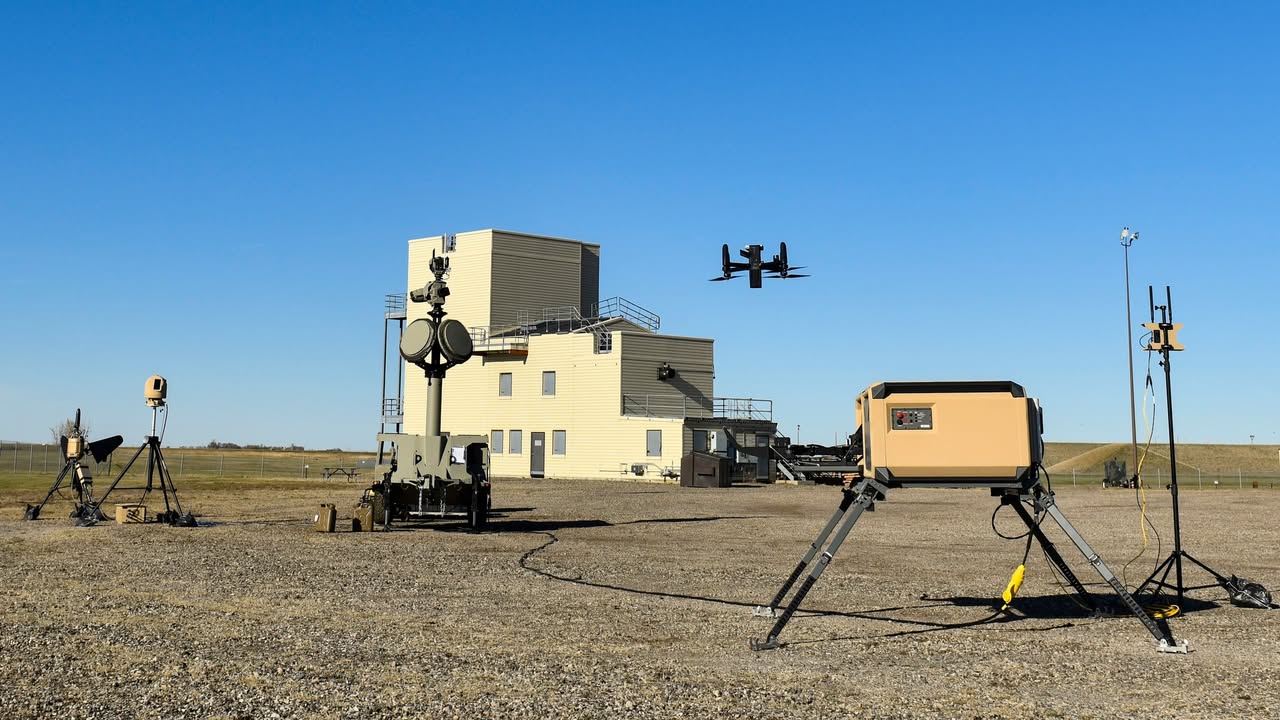
The Joint Interagency Task Force 401 has published a new guide titled “Counter-UAS Operations: Safeguarding Freedoms and Preserving Privacy,” outlining how security agencies detect potentially dangerous drones and the legal limits governing those systems.
Source: Department of
DefenseWar
Photo: Courtesy
As small drones become more common in both civilian and military airspace, a U.S. defense task force is working to address the growing security risks they pose — while attempting to balance those efforts with privacy protections.


The Joint Interagency Task Force 401 has published a new guide titled “Counter-UAS Operations: Safeguarding Freedoms and Preserving Privacy,” outlining how security agencies detect potentially dangerous drones and the legal limits governing those systems. According to the task force, the document is intended to explain how emerging counter-drone technologies operate and how they are designed to comply with federal surveillance laws.

The guide describes several types of passive sensor technologies used to monitor the airspace for drones, including radar systems, electro-optical and infrared cameras, and radio-frequency detection tools. Officials say these systems focus on identifying the physical characteristics of a drone’s signal — sometimes described as a “signal fingerprint” — rather than analyzing the content of any communications, allowing authorities to determine the type and location of a drone without accessing private data.
Brig. Gen. Matt Ross, director of the task force, said the spread of small unmanned aircraft has created new security challenges beyond traditional military operations. “Countering drones is not just a battlefield problem — it’s a homeland defense imperative,” Ross said in the announcement, noting that the goal is to build a distributed network of sensors and response systems capable of protecting both service members and civilian communities.
The task force says the guide is part of a broader effort to coordinate counter-drone programs across the Department of Defense and other federal agencies. Officials emphasized that the technologies are designed with privacy considerations in mind, collecting only the information needed to identify a potential threat while minimizing data collection whenever possible.
The two-page framework document describing the technologies and legal guidelines is publicly available and will also be published in the Las Cruces Digest Reading Room.
You must be logged in to post a comment.