
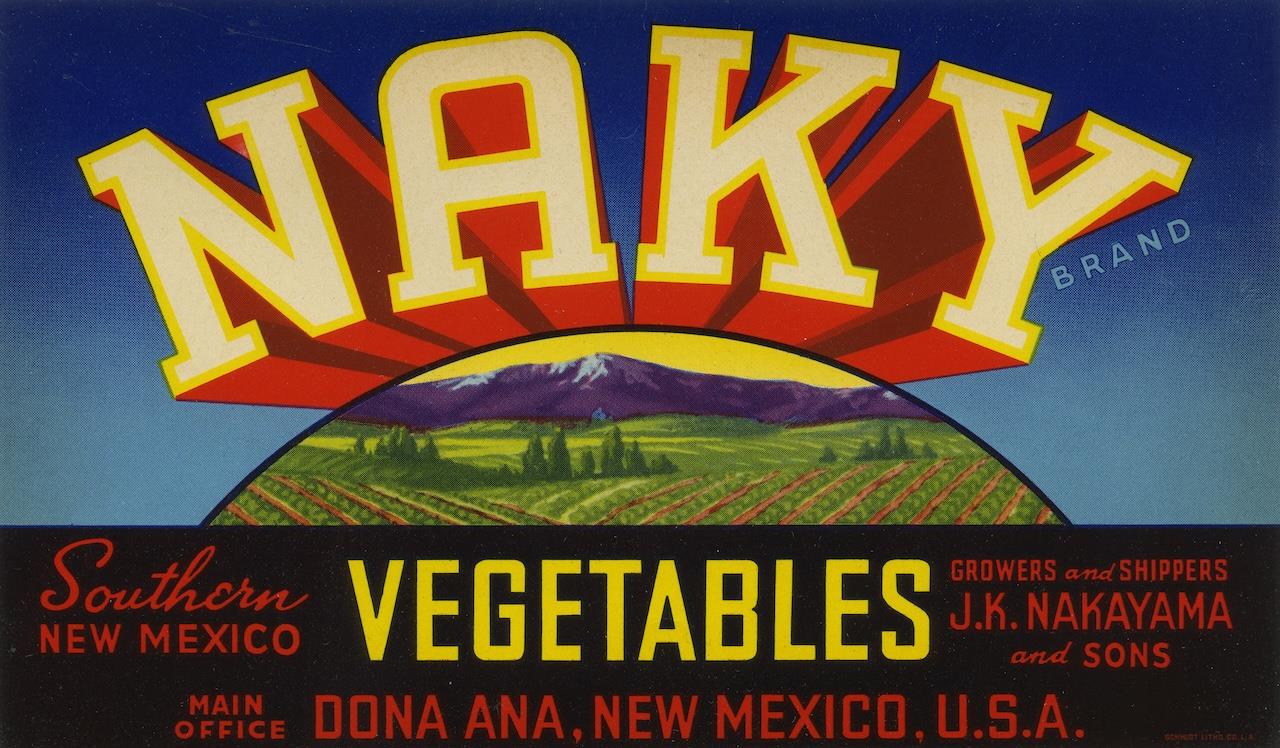
The exhibit tells the story of the Nakayama family and their enduring impact on local agriculture and community life.
Source: NMSU Newsroom
By Tatiana Favela
Photos: Courtesy
A new exhibit at New Mexico State University brings to light the story of a Japanese American farming family whose work helped shape the agricultural and social landscape of southern New Mexico, underscoring the university’s commitment to preserving underrepresented histories and advancing community-engaged scholarship.


“Land, Labor, and Community: A Japanese American Farming Family” opens from 2 to 4 p.m. Wednesday, March 11, at the Branson Library on the main campus. The exhibit, curated by Jennifer Olguin, associate professor and Rio Grande Historical Collections archivist for the NMSU Library, Archives and Special Collections, and co-curated by Elizabeth Villa, library specialist, is located on the fourth-floor Humboldt Casad & Evangeline Smith Mandell Exhibit Gallery. It is free and open to the public.

The exhibit tells the story of the Nakayama family and their enduring impact on local agriculture and community life. Through photographs, documents and interpretive narratives, the exhibit explores how land and labor shaped the family’s livelihood, identity and sense of belonging across generations.
Situating the Nakayama family’s experiences within broader histories of Japanese American immigration, exclusion and resilience in the Southwest, the exhibit highlights the vital role Japanese American farmers played in shaping regional agricultural and economic landscapes, particularly in the Mesilla Valley.
The exhibit also marks the recent acquisition of the Nakayama family papers and underscores the importance of preserving family and community histories. Campus and community members are invited to reflect on themes of perseverance, community and continuity.
“What drew me to the Nakayama family’s story was how it represents land, labor and community in southern New Mexico,” said Olguin. “Their experience reflects not only the resilience and resourcefulness of a single family, but also the broader, often overlooked contributions of Japanese American farmers to local agriculture and regional history. Through photographs, documents and everyday objects, the Nakayama materials reveal how work on the land was tied to identity, belonging and contributing to agricultural efforts in the Mesilla Valley.”
Olguin said the exhibit aligns with the university’s responsibility to highlight histories that have long been underrepresented in archival collections and public narratives.
“This felt like the right moment to share the Nakayama family’s story with the campus and broader community as conversations about migration, labor and belonging continue to shape our present,” she said.
Rather than focusing solely on major historical events, the exhibit centers on everyday life – working the land, supporting family and maintaining community connections – to help visitors understand how national histories affected individuals at the local level.
“I hope visitors leave understanding that land and labor are central to the formation of identity, belonging and community over time,” Olguin said. “For the Nakayama family, working the land created stability, connection and a sense of purpose that carried across generations. The exhibit shows how these everyday practices shaped family bonds and community ties, and how those relationships continue to influence how we understand belonging today.”
For more information about the exhibit opening, contact Olguin at jechavez@nmsu.edu.
You must be logged in to post a comment.