
New Mexico identified as national model for Native education.
Source: N.M. Public Education Department
Photos: Courtesy
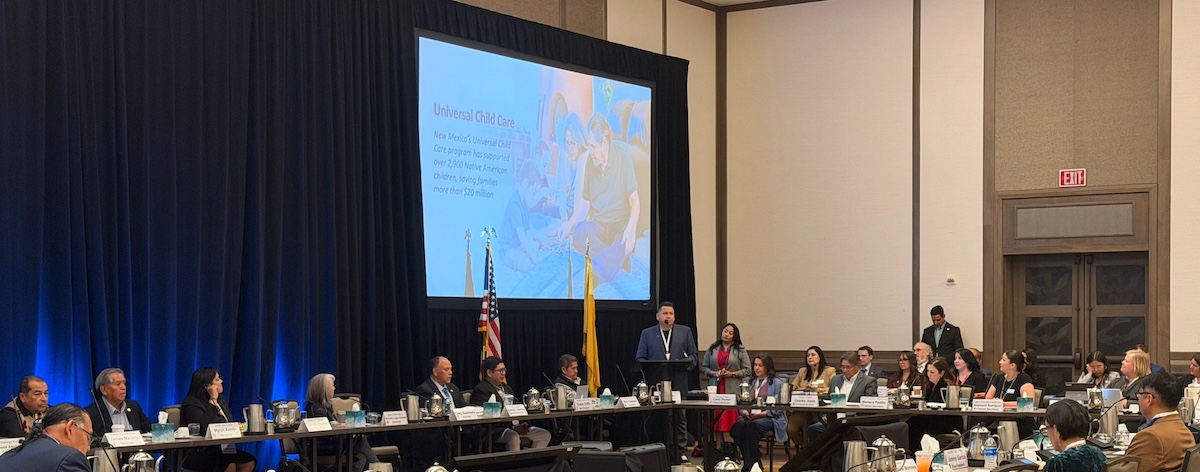
SANTA FE – Native American students and families shared feedback directly with state and tribal leaders Wednesday at the Government-to-Government Indian Education Summit at Santa Ana Pueblo.
“New Mexico has made historic investments in Native American education because honoring tribal sovereignty and supporting culturally relevant learning leads to stronger communities and better outcomes for students,” said Governor Michelle Lujan Grisham. “We are building an education system that reflects the strengths, languages and traditions of our Native students, and setting an example for the nation.”


Governor Michelle Lujan Grisham meets with families at Government-to-Government Indian Education Summit at Santa Ana Pueblo. (Photos: Courtesy)
“This summit reflects our dedication to working alongside tribal nations to ensure that every Native American student in New Mexico has access to a high-quality, culturally relevant education,” said Public Education Secretary Mariana D. Padilla.

Pictured: Assistant Secretary of Education, Indian Education Division, KatieAnn Juanico (Photo: Courtesy)
An afternoon session featured student and family testimonials, with students describing how they overcame obstacles, drew strength from culturally rooted programs and reached key milestones in school and in their personal lives.
Logan Mitchell, a 12th grade student at Highland High School, and member of the Navajo Nation, spoke about the value of the state’s Graduation Reengagement Internship Program, which supports high school seniors who are not on track to graduate through paid internships and community-based capstone projects that promote credit recovery, career readiness and personal growth.

“Doing this program helped me with knowing and seeing all this history and the future plans for myself,” said Logan. “I just want to make a name for myself, and for Native Americans specifically.”
Molly, an eighth grade student from the Pueblo of Santa Ana, expressed the importance of tutoring programs.
“Mentally, tutoring can help kids grow and develop with different skills that are so important, because education is power,” said Molly.
A panel of three nationally recognized experts—Jennifer Rackliff, Ernest House Jr., and Dr. Elmer Guy—highlighted the progress New Mexico has made in initiatives such as increased tribal consultation, targeted investments in Indigenous language and culture programs, universal child care, and expanded pathways to higher education for Native American students.
“New Mexico is demonstrating what is possible when states truly engage in government-to-government relationships with tribal nations,” said Jennifer Rackliff, executive director of the National Indian Child Care Association. “The policies and practices being implemented here are setting a standard that others across the country are beginning to follow.”
Dr. Elmer Guy, president of Navajo Technical Institute, highlighted the importance of sustained collaboration across education systems, noting that alignment between early childhood, K–12 and higher education has been critical to improving outcomes. Ernest House Jr., senior policy director and director for the Center for Tribal and Indigenous Engagement at the Keystone Policy Center, added that New Mexico’s efforts to center Native American voices in decision-making processes have played a key role in building trust and driving progress.
The Government-to-Government Indian Education Summit was organized by the Public Education Department, Higher Education Department, and Early Childhood Education and Care Department, providing a platform for open dialogue to support Native American students and tribal communities.
You must be logged in to post a comment.