
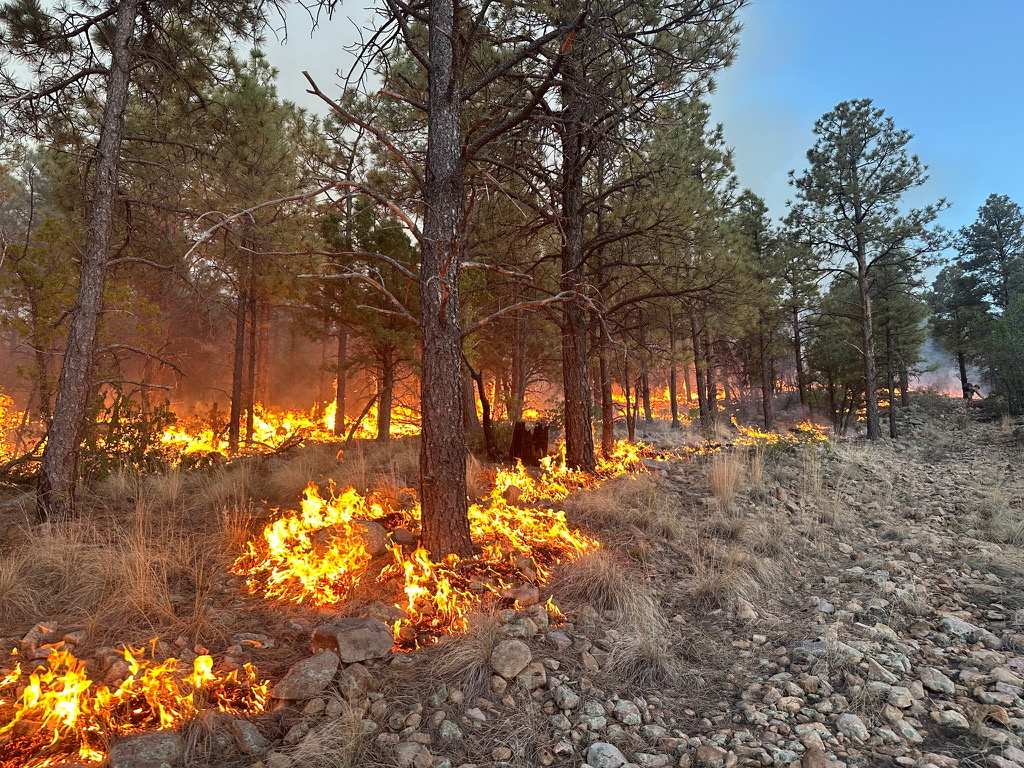
The fire was reported Saturday evening at 24,828 acres with containment increasing sharply to 43%, up from 15% earlier in the day.
Source: Seven Cabins Fire (via Facebook)
Photos: Courtesy
The Seven Cabins Fire continued to grow Saturday as crews pushed containment efforts across the Capitan Mountain Wilderness, though improved weather conditions and expanded aerial operations helped firefighters make significant progress on portions of the blaze.
The fire was reported Saturday evening at 24,828 acres with containment increasing sharply to 43%, up from 15% earlier in the day. Fire officials attributed much of the increase to successful mop-up operations on the east side of the fire, where crews were inserted to secure and strengthen containment lines. Additional crews also began constructing line from Forest Road 536 to improve access into the southeast portion of the fire while heavy equipment crews continued improving the 536 road and clearing brush along Forest Road 57.


Earlier Saturday morning, the fire was estimated at 22,631 acres and 13% containment after overnight humidity increases accompanied a cold front that moved across the fire area. Fire officials said crews intended to take advantage of the higher moisture levels to connect additional containment lines and reinforce the fire’s edge.
The fire, which began May 14 and is believed to be human caused, remains burning in heavy dead fuels within the Peppin burn scar area. The Southwest Area Incident Management Team 1, led by Incident Commander Caleb Finch, reported 916 personnel assigned to the fire Saturday evening.

Firefighters continued offensive operations throughout the day, including strategic ignitions designed to remove fuels ahead of the main fire and slow future fire spread. On the south end of the fire, aerial firing operations were used to encourage the fire to slowly back downslope instead of establishing in drainages where it could make aggressive uphill runs.
Structure protection operations also continued around threatened communities. Crews on the north side focused on structure assessments and mop-up work while eastern structure groups worked to improve defensible space. Firefighters also continued efforts to keep the fire west of the community of Arabela while preparing secondary holding features should conditions worsen.

Aviation resources expanded significantly Saturday despite a temporary interruption caused by an unauthorized aircraft violating the Temporary Flight Restriction over the fire area. Officials said firefighting aircraft were briefly grounded during the incident.
Fire managers reported aerial support capacity has increased substantially with more than 200,000 gallons of water per day now available through three designated fill sites. A temporary FAA tower is also operational to improve airspace coordination and aviation safety.

Officials emphasized that there are eight helicopters and various additional aircraft assigned to the Seven Cabins Fire. For the safety of firefighters and aviators, a Temporary Flight Restriction remains in place over the fire area. It is illegal to fly drones near the fire, and officials warned that any unauthorized drone activity forces all firefighting aircraft to be grounded because of the risk of a catastrophic mid-air collision.
Smoke remained visible Saturday due in part to planned ignition operations conducted Friday and Saturday. Winds were expected to continue pushing smoke east of the fire area while lighter overall winds and increased humidity moderated some fire behavior.
Forest closures remain in place across portions of the Capitan Mountain area, including the Baca Campground and sections surrounding Highway 246 and the South Base Trail System. Stage 1 fire restrictions also remain active.
Mandatory “GO” evacuations continue from State Highway 246 to the ridge top of the Capitan Mountains between Mile Marker 13 and Boy Scout Mountain. “SET” status evacuations remain north of Highway 246 in the same area.
Officials continue urging the public to obey all closures and airspace restrictions so crews can safely continue suppression operations.
You must be logged in to post a comment.