
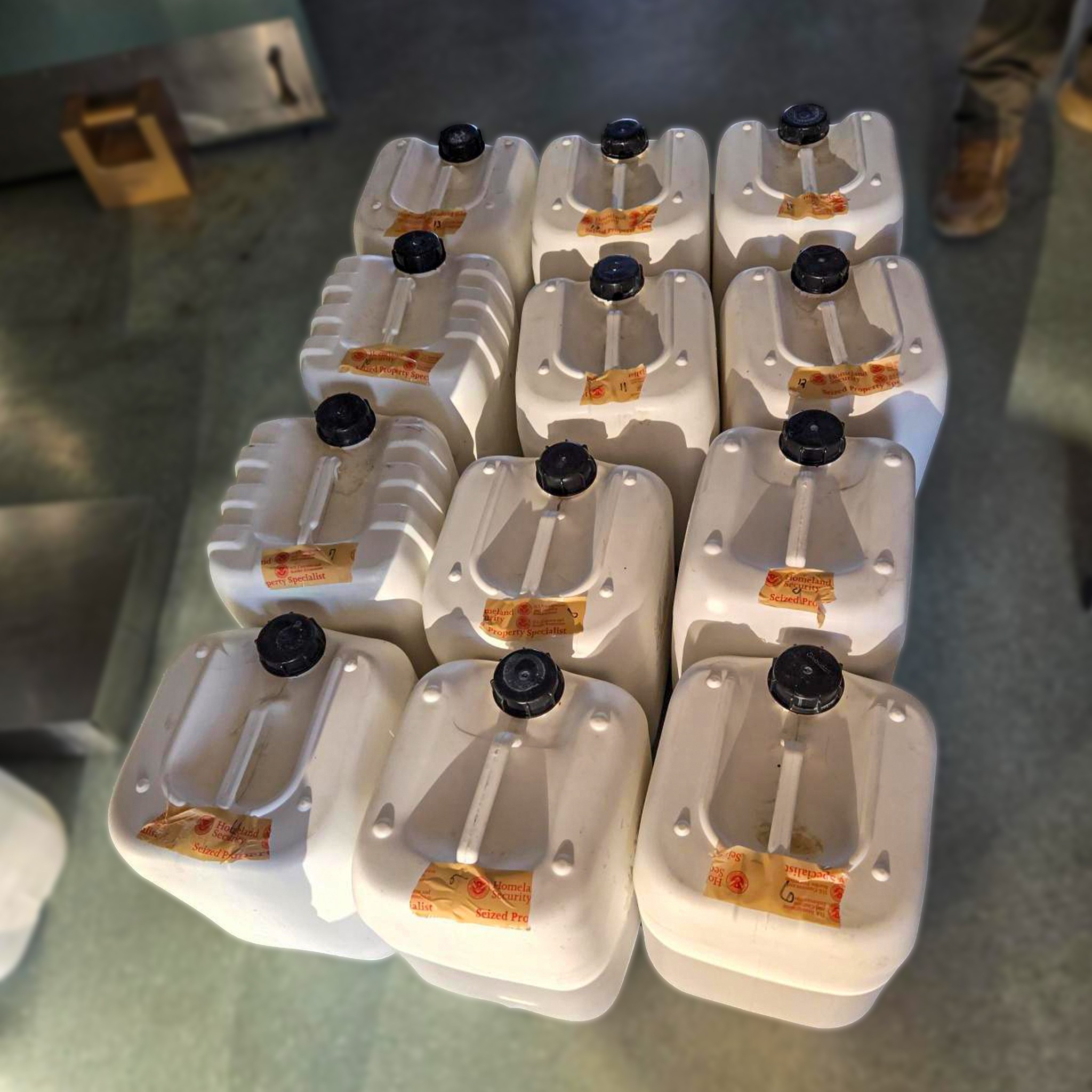
According to a Border Patrol social media post, a U.S. citizen attempting to pass through the checkpoint raised suspicion after exhibiting nervous behavior.
Source: U.S. Border Patrol (via Facebook)
Images: Coutesy
ALAMOGORDO, N.M. — U.S. Border Patrol agents reported the seizure of more than 700 pounds of what officials described as “liquid cocaine” during a recent stop at an immigration checkpoint near Alamogordo.
According to a Border Patrol social media post, a U.S. citizen attempting to pass through the checkpoint raised suspicion after exhibiting nervous behavior. A K9 alert prompted a secondary inspection, where agents discovered 15 containers initially presented as aloe vera but later identified as liquid cocaine. The driver was arrested and is expected to face federal drug charges.


At this stage, details of the case remain limited. Information released through agency social media posts often precedes formal court filings, which typically provide a more complete account of the incident, including charging documents, evidentiary details, and the circumstances surrounding the stop. Until those filings are made public, the specifics of the seizure remain based on preliminary agency reporting.

What Is “Liquid Cocaine”?
Despite the name, “liquid cocaine” is not a distinct form of the drug in the way powder or crack cocaine are commonly understood.
Instead, the term generally refers to cocaine that has been dissolved or chemically suspended in a liquid solution for the purpose of concealment and transport.
This method is used by traffickers to:
- disguise the substance as everyday liquids (such as beverages, oils, or personal care products)
- evade detection during transport
- allow for later extraction and reprocessing into powder form
Once seized, the liquid typically requires chemical processing to recover usable cocaine, and the total weight reported often includes both the drug and the liquid medium in which it is suspended.
Public Information vs. Public Messaging
Drug seizure announcements from federal agencies are often released quickly and are typically limited in scope, focusing on the quantity seized, method of concealment, and arrest made.
However, these summaries are not a substitute for court records.
Key details—such as how the substance was tested, how weight was calculated, and the specific charges filed—are usually clarified only after federal complaints or indictments are submitted in court. In some cases, early descriptions may be refined or adjusted as investigations proceed.
What Comes Next
Federal prosecutors are expected to file formal charges in the case, which will provide additional detail about the seizure, including laboratory analysis of the substance and the legal basis for prosecution.
Until then, the reported seizure offers a snapshot of enforcement activity in the region, while leaving open questions that are typically addressed through the judicial process.
You must be logged in to post a comment.