
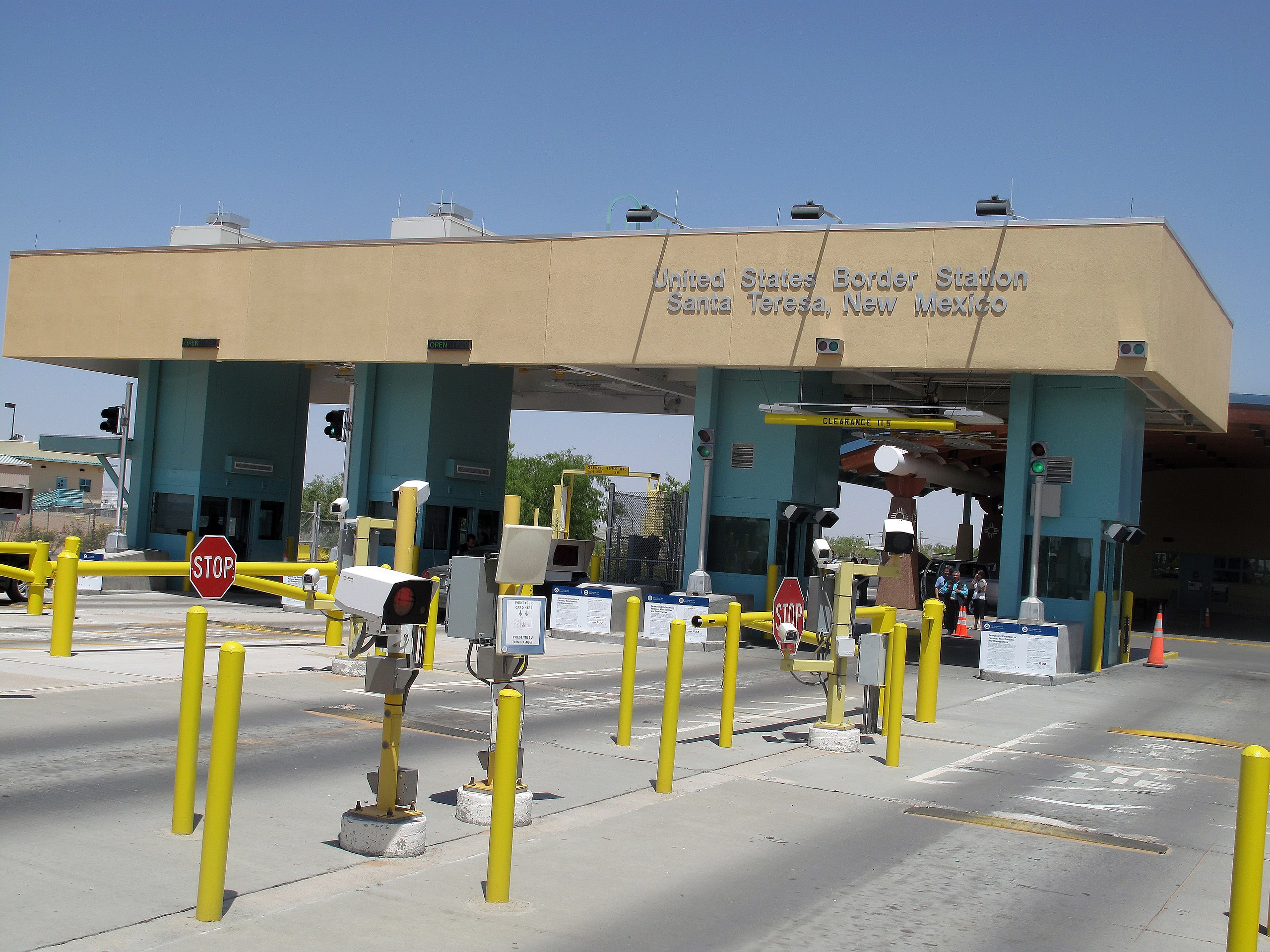
Beyond total volume, the report also assigns Santa Teresa a “low risk” designation, part of a federal effort to evaluate congestion, redundancy, and vulnerability across major land ports of entry.
Source: “Transborder Freight Data Annual Report: 2025”
By U.S. Department of Transportation Bureau of Transportation Statistics
Images: Courtesy
As cross-border trade continues to shape the economy of southern New Mexico, newly released federal data highlights the growing role—and relative stability—of the Santa Teresa Port of Entry. According to the latest report from the Bureau of Transportation Statistics, more than $30 billion in goods moved through the Santa Teresa crossing in 2025, placing it among the top freight gateways along the U.S.-Mexico border.

Beyond total volume, the report also assigns Santa Teresa a “low risk” designation, part of a federal effort to evaluate congestion, redundancy, and vulnerability across major land ports of entry. In practical terms, that rating suggests the crossing is less likely to experience severe bottlenecks or disruptions compared to higher-risk corridors like Laredo, Texas, where traffic volume and limited alternatives can strain capacity during peak periods.
Trade through Santa Teresa remains heavily weighted toward imports, with roughly 65 percent of goods entering the United States. Still, exports account for a notable 34.9 percent of total freight—an indication that the crossing is not just a receiving point for goods, but an active conduit for U.S. products moving into Mexican markets.

At the same time, the port saw a significant shift in freight activity over the past year. Truck-based trade through Santa Teresa declined by nearly 15 percent compared to 2024, reflecting broader fluctuations in supply chains and cross-border manufacturing flows. Despite that drop, trucking continues to dominate cross-border commerce overall, particularly along the southern border where goods move quickly between production hubs in Mexico and distribution networks in the United States.
The data comes amid continued growth in U.S.-Mexico trade, which reached nearly $873 billion in 2025 and continues to expand as manufacturers move operations closer to U.S. markets. This “nearshoring” trend has increased the importance of land ports across the southern border, even as activity shifts between crossings.

Value of Monthly Freight by Truck with Canada and Mexico (USD): 2006-2025
While northern border crossings with Canada remain essential for energy and raw material flows, the southern border—driven largely by manufacturing and trucking—continues to carry a growing share of North American trade. Within that system, Santa Teresa serves as a quieter but increasingly important player, offering capacity and flexibility in a region dominated by some of the busiest ports in the country.
For southern New Mexico, the takeaway is straightforward: even as volumes fluctuate year to year, the Santa Teresa Port of Entry remains a stable and strategically positioned link in a trade network that spans the continent.
You must be logged in to post a comment.