
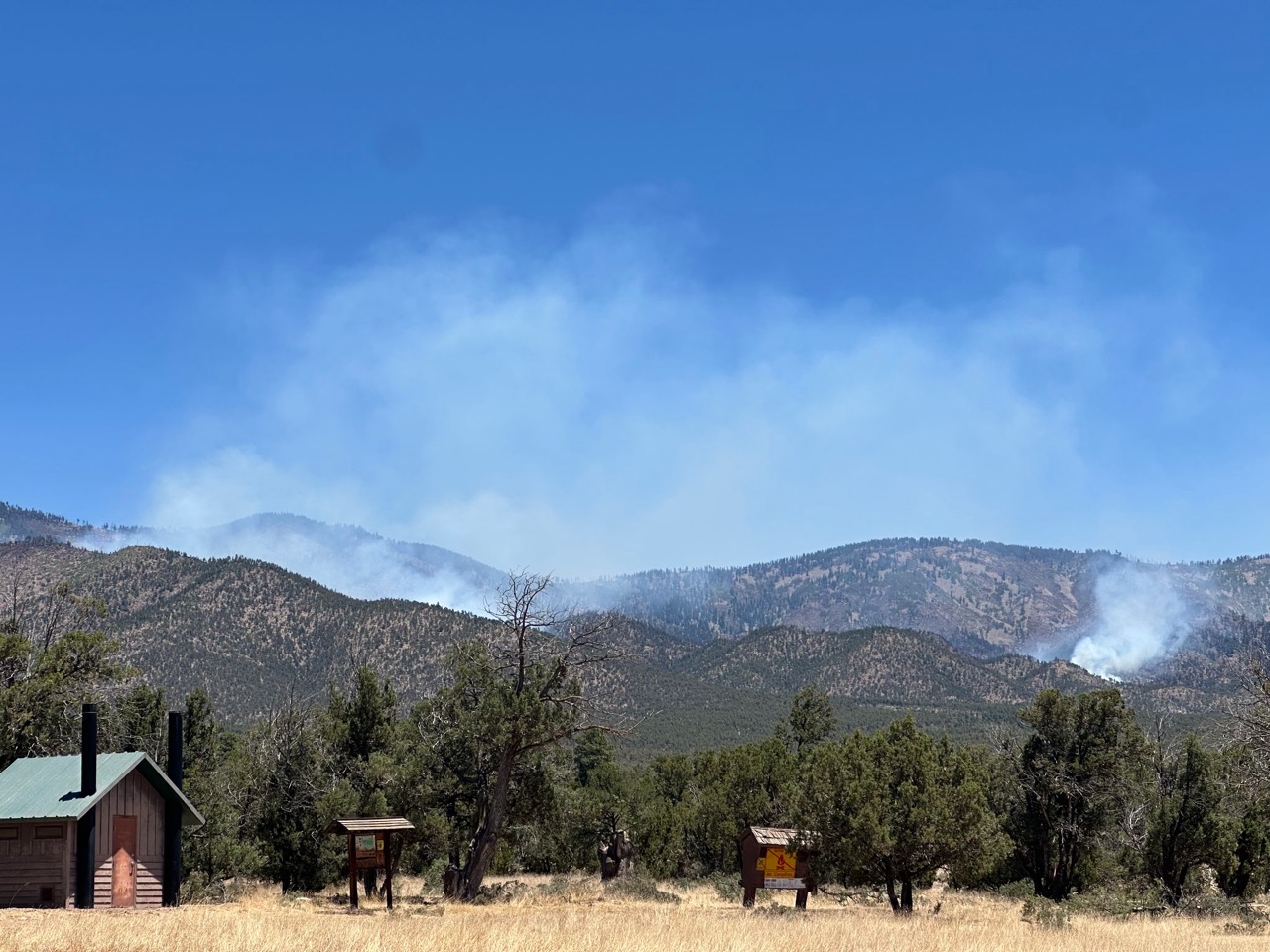
While fire growth has slowed significantly, incident managers warned that smoke will remain a feature of the landscape for the foreseeable future.
Source: Seven Cabins Fire (via Facebook)
Photos: Courtesy
The Seven Cabins Fire in the Capitan Mountain Wilderness remained 51 percent contained Sunday as firefighters continued efforts to secure containment lines and repair areas affected by suppression activities.
The human-caused wildfire has now burned 29,167 acres and is being managed by 836 personnel.

While fire growth has slowed significantly, incident managers warned that smoke will remain a feature of the landscape for the foreseeable future.
“Fuels continue to be consumed so smoke can be expected until a season-ending event,” according to Sunday’s incident update.

Warmer temperatures, low humidity and dry conditions increased fire activity within the fire’s interior over the weekend. Overnight downslope winds pushed the fire lower on the landscape, adding roughly 200 acres. Fire officials estimated another 200 to 1,000 acres of growth could occur Sunday, though most burning remains within the established fire perimeter.
In a video update released Sunday, Air Resource Advisor Steve Paes discussed the role smoke continues to play in the incident. Heavy wildfire smoke can create health concerns for sensitive populations, reduce visibility on roadways and affect aviation operations. Residents can monitor local conditions using the Environmental Protection Agency’s Fire and Smoke Map.


Air monitoring Equipment and a masticator that is used for fire suppression and rehabilitation efforts.
Fire managers reported that increased activity Saturday led to a noticeable increase in smoke production. Similar conditions are expected during hot, dry weather periods throughout the coming weeks.
Despite the increased smoke, officials said impacts should remain concentrated near the fire area under current conditions.
Firefighters continue patrols along containment lines while crews conduct suppression repair work on roads, fences and other areas disturbed during firefighting operations. Seeding has begun on dozer lines, helipads and other impacted locations to reduce erosion and encourage recovery. Additional crews are using chippers and masticators to convert hazardous vegetation into mulch that is less likely to carry flames.
Structure protection teams also remain active south of the fire area, helping landowners improve the resilience of homes and other buildings.
Weather conditions remain a concern. Relative humidity was forecast to drop as low as 8 percent Sunday, with temperatures rising. Thunderstorm chances are expected to increase beginning Monday, with the greatest storm potential forecast Tuesday night. While rainfall could aid firefighting efforts, lightning associated with storms may also spark new fires across the region.
Evacuation statuses continue to be reviewed daily. SET notifications remain in effect for portions of the Fort Lone Tree area, Padilla Ranch vicinity and areas along State Highway 246.
A forest closure remains in effect across portions of the Capitan Mountains, including Baca Campground. Stage 1 fire restrictions and a Temporary Flight Restriction over the fire area also remain in place.
Although smoke has diminished from its peak levels in some locations, fire officials reminded residents that crews, heavy equipment and aircraft continue operating throughout the incident area and urged the public to remain cautious around active firefighting operations.
You must be logged in to post a comment.