
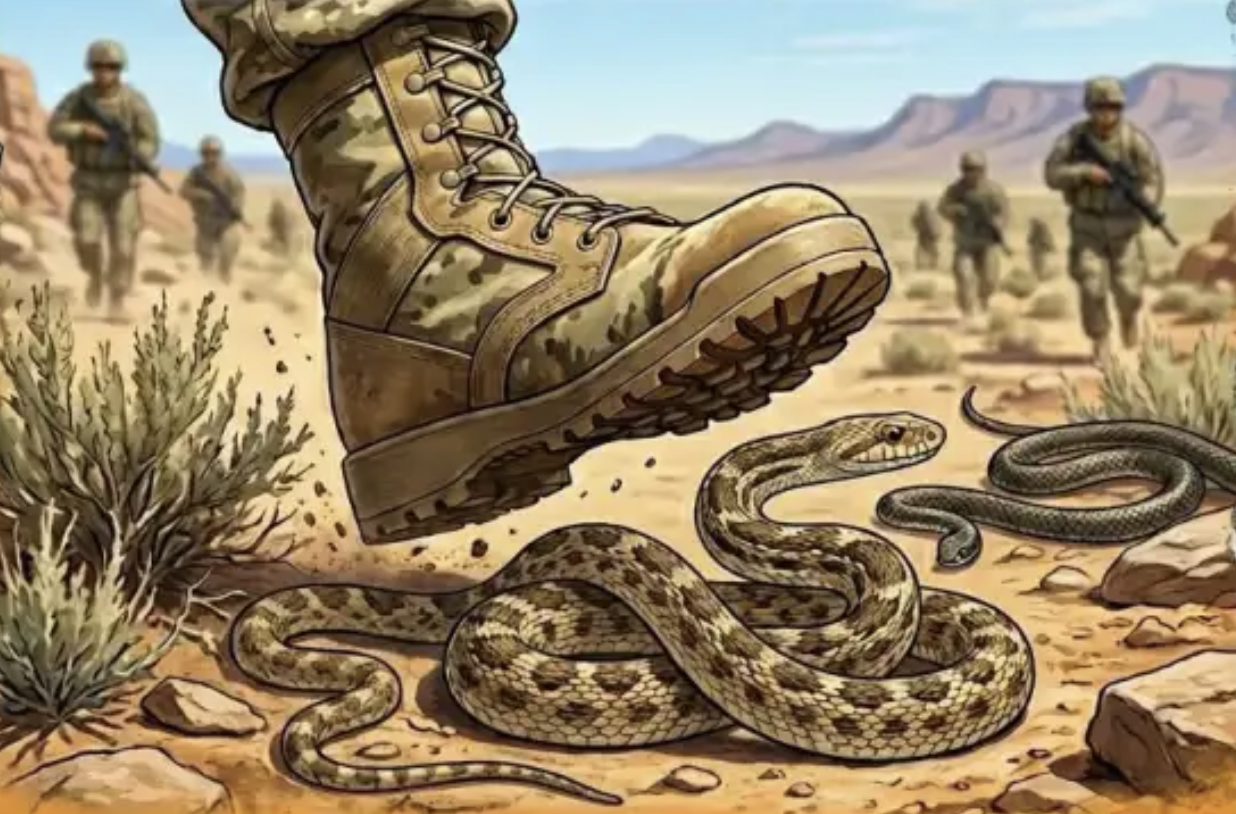
The Guard recently shared a snake safety advisory encouraging soldiers and airmen to stay vigilant while operating in training areas, particularly in tall grass, brush, rocky terrain and other locations where snakes may seek shelter from the heat.
Source: New Mexico National Guard (via Facebook)
Image: Courtesy
As summer temperatures rise across New Mexico, the New Mexico National Guard is reminding personnel training in the field to remain alert for snakes and other wildlife hazards commonly encountered during the warmer months.
The Guard recently shared a snake safety advisory encouraging soldiers and airmen to stay vigilant while operating in training areas, particularly in tall grass, brush, rocky terrain and other locations where snakes may seek shelter from the heat.

The advisory recommends taking a few simple precautions before moving through undeveloped areas, including checking tall grass and shrubs, inspecting logs and large rocks before approaching them, and looking carefully before stepping over obstacles. Personnel are also encouraged to give snakes plenty of space and avoid any attempt to catch or handle them.
If a snake is encountered, the National Guard advises individuals to remain calm, freeze momentarily and slowly back away to create distance. In the event of a snakebite, officials recommend seeking emergency medical assistance immediately, remaining as still as possible, and keeping the affected area below heart level. The advisory specifically warns against attempting to suck venom from a wound, a long-discredited practice that can worsen injuries and delay proper treatment.

While the warning was issued for military training areas, the safety recommendations apply equally to hikers, campers, hunters, ranchers and outdoor recreationists throughout New Mexico. Rattlesnakes and other snake species become more active during the summer months, particularly during the early morning and evening hours when temperatures are more moderate.
The reminder comes as outdoor activity increases across the state and monsoon season approaches, bringing more people into parks, trails and remote areas where wildlife encounters are more common.
You must be logged in to post a comment.