
Southwest Catch of the Week

Rio Grande: Rielly Pape caught a blue catfish using a Thomas EP-series spinner between Elephant Butte Lake and Caballo Lake on June 24. “I was fishing an ultralight rod with 4-pound test line for white bass when I hooked into this blue catfish,” he said. “It was fair hooked in the mouth, an incredible fight that pushed the ultralight to its absolute limit.”
Source: New Mexico Department of Wildlife
Photos: Courtesy
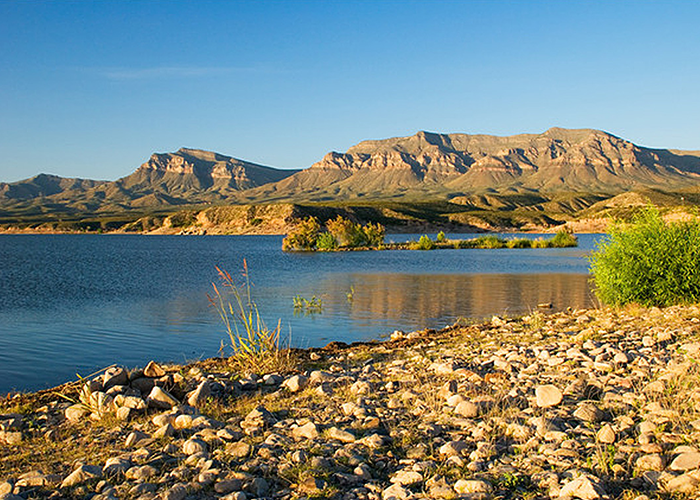
Cover Photo: Caballo (Courtesy New Mexico State Parks)
Southwest New Mexico Fishing Report
- Bear Canyon Lake: Fishing conditions have been adversely affected in the aftermath of the Trout Fire.
- Bill Evans Lake: Fishing for largemouth bass was very good.
- Caballo Lake: The most recent report was received June 25. At that time, fishing for white bass was good to fair using green and orange trolling lures. Walleye remained slow to inactive. Water levels are changing across the lake; boaters should exercise caution in low-water areas.
- Elephant Butte Lake: Fishing for largemouth bass was fair to good when using rubber crawdads. The South Monticello boat ramp is currently closed due to low water levels. The closure will be lifted when water levels rise and conditions allow. For more information, visit the Elephant Butte State Park page.
- Gila River: Streamflow near Gila on Tuesday morning was 10.1 cfs.
- Gila Waters: Streamflow near Gila Hot Springs on Wednesday morning was 26.3 cfs.
- Lake Roberts: Fishing for trout was fair to good when using Pink PowerBait and salmon eggs. Fishing for catfish was fair to good when using hot dogs.
- Percha Dam: Fishing for white bass was slow when using horse-head jigs.
- Quemado Lake: Fishing for trout was slow when using garlic worms.
- Rio Grande: Fishing for catfish was good when using Thomas EP-series spinners. Streamflow below Elephant Butte Dam on Wednesday morning was 1,280 cfs.
- Whitewater Creek: The most recent report was received June 25. At that time, fishing for Gila trout was fair to good when using flies and produced 3-to-14-inch trout.
- Young Pond: Fishing for catfish was good when using hot dogs.
We received no reports for the following waterbodies over the past three weeks: Escondida Lake, Glenwood Pond, Rancho Grande Ponds, Trees Lake and Snow Lake.
Stocking Note: Young Pond received around 137 Channel Cat Fish on June 30th, comprising approximately 229 lbs of additional stock in the 18”/per range.

Fishing in low water creates new set of challenges
By Darren Vaughan
Communications Director
New Mexico is an arid state with at-times challenging fishing conditions, even in the wettest of years.
This year, conditions are even tougher. We endured a warm, dry winter, largely devoid of snow, resulting in lower-than-normal runoff this spring. With summer in full swing, many streams across the state are reporting below average flow rates.
But even with the low water, all is not lost for eager anglers across the state who want to enjoy longer days, sunny afternoons and time with family before school starts again next month (sorry for the reminder, kids!).
One thing to keep in mind as you drop your line in the water is that a lot of the areas that fish would normally use for cover are now out of the water. Not only does that mean they aren’t in their normal hiding spots, but it also means they’re concentrated in the middle of the stream, where the water is deepest.
That doesn’t mean it’s as simple as casting your line a little bit further and hitting the trout jackpot. Another side effect of low water is a slower flow, which can allow sediment to settle and make the water clearer. When the water is clear, fish tend to be a little pickier about the prey they pursue, so anglers have to be a bit more deliberate about their choice of bait or flies.
These are but a couple of tips I came across as I ponder my own angling possibilities in the coming months. A quick Google search for “low water fishing tips” generates a smorgasbord of results.
I also checked with our experts in the Fisheries Management Division to see what they recommend. Sportfish Program Manager Matt Zeigler noted that fishing in low-light conditions, such as early in the morning or late in the afternoon, or on an overcast day can be beneficial. Meanwhile, Coldwater Sportfish Supervisor Taylor Booth had these tips:
- Focus on shaded areas, submerged logs, weed beds and boulders in low water. Fish seek cover in shallow conditions.
- Look for changes in depth, such as flat shelves that drop off into deeper water, undercut banks and underwater river channels.
- Use natural colors such as greens, browns and blacks instead of flashy patterns like chartreuse, iridescent or metal spinners.
- Approach quietly and stealthily — avoid loud noises or noisy baits/gear. Shallow/low-water fish spook easier.
- Look for colder water from incoming springs or rivers. Cold water holds more oxygen and is less stressful on a fish’s nervous system than warm water. In rivers themselves, look for fast-moving riffles.
- Be mindful of the habits and tendencies of the species you are targeting. Bass are more tolerant to warm water than, say, trout, and can be easier to target in shallow or low water.
I’d be curious to hear some tips from those of you who’ve been fishing through many wet and dry years. What works best for you? Feel free to email me with your own tips and tricks.
Help me crack the code before I head out one of these weekends. I’d hate to come home with an empty cooler.
You must be logged in to post a comment.