
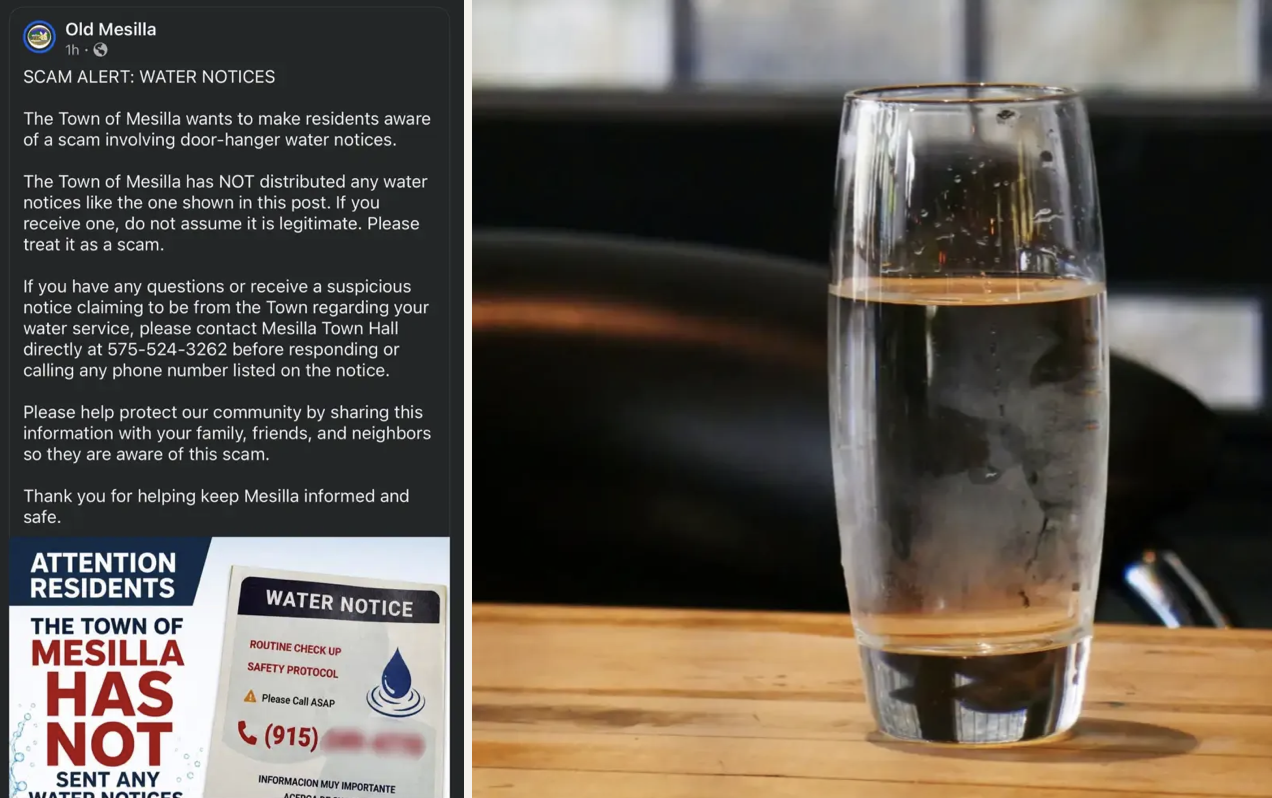
In recent days, the Town of Mesilla, Las Cruces Utilities, New Mexico Corrections Department, and the New Mexico Department of Transportation have each issued alerts about separate scams targeting New Mexicans.
Sources: Mesilla Marshals Office (via Facebook), Las Cruces Utilities (via Facebook), New Mexico Corrections Department (via Facebook)
Images: Courtesy
LAS CRUCES, N.M. – Several government agencies across southern New Mexico are warning residents to remain vigilant after receiving reports of scammers impersonating public agencies in attempts to collect money or personal information.
In recent days, the Town of Mesilla, Las Cruces Utilities, New Mexico Corrections Department, and the New Mexico Department of Transportation have each issued alerts about separate scams targeting New Mexicans.

The Town of Mesilla and Las Cruces Utilities both warned residents about fraudulent door hangers or flyers claiming to concern water service or water quality. Officials from both agencies emphasized that the notices were not created, distributed or authorized by their offices. Residents are urged not to complete or return any forms associated with the notices and instead contact their local utility directly if they have questions.


The New Mexico Corrections Department also reported that scammers have been posing as officers with its Adult Probation and Parole Division in an effort to extort money. According to the department, callers falsely claim to represent law enforcement and demand payment using gift cards or other nontraditional payment methods. Officials stressed that the department never requests payments over the telephone or asks for payment using gift cards, cryptocurrency or prepaid debit cards.

Meanwhile, the New Mexico Department of Transportation warned residents about fraudulent text messages and phone calls claiming recipients owe unpaid traffic tickets or fees. The department emphasized that it does not send text messages or make telephone calls requesting payment and advised anyone receiving such messages not to click links or provide financial information.

Although the scams differ, officials say they share several common warning signs, including unsolicited contact, requests for immediate action, demands for payment through gift cards or cryptocurrency, suspicious links, and attempts to obtain personal information.
Residents who receive suspicious calls, text messages, emails or door notices are encouraged to contact the agency directly using a verified phone number rather than any contact information provided by the suspected scam. Authorities also recommend preserving text messages, voicemails or emails when possible and reporting suspected fraud to local law enforcement.
You must be logged in to post a comment.