
The fight for recognition and compensation of these “Downwinders” continues to this day, through programs like the Radiation Exposure Compensation Act (RECA).
Source: New Mexico Historic Sites (via Facebook)
Photos: Courtesy
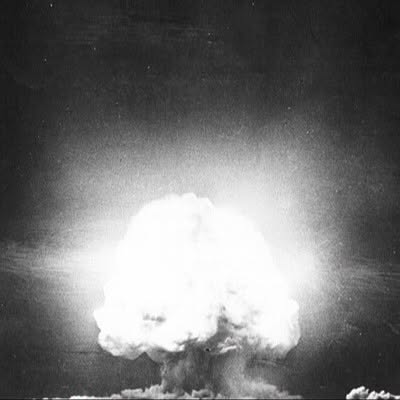
Cover Photo Caption: “Trinity test mushroom cloud after 12 seconds. Department of Energy.”
Last week in history, just over 75 miles from the Fort Selden Historic Site and deep into the Jornada del Muerto, the Trinity Test changed history forever. At 5:29 A.M. on July 16th, 1945, the world’s first nuclear bomb was detonated, marking the beginning of the nuclear age.

J. Robert Oppenheimer (in light hat), General Leslie Groves (man in military dress to the right of Oppenheimer), and others at the ground zero site of the Trinity test after the bombing of Hiroshima and Nagasaki, September 9, 1945.
When looking for locations to conduct the test, the U.S. Army compiled several sites that met specific requirements including isolation, flatness, consistently good weather, among others. The Jornada del Muerto was chosen because the area was already mostly owned by the government and was close enough to the Los Alamos Laboratory, where most of the scientists were based. Although land was seized from a number of ranchers and families in the area through eminent domain, this location was also considered to be safer for nearby populated areas, which proved to be a misconception.

In reality, nearly 500,000 people were living within a 150-mile radius of the test and experienced a wide range and variety of effects, both short and long-term. The fight for recognition and compensation of these “Downwinders” continues to this day, through programs like the Radiation Exposure Compensation Act (RECA).
You must be logged in to post a comment.