


Lake Roberts: Eric Artiaga had good luck at Lake Roberts targeting catfish with hot dogs in recent weeks.
Source: N.M. Department of Wildlife
Photos: Courtesy NM Wildlife and National Park Service
ATTENTION: Several lakes throughout New Mexico are under Harmful Algae Bloom (HAB) watches or warnings. Visit the New Mexico Environment Department’s HAB Advisory Map for the latest conditions and advisories.
Southwest New Mexico Fishing Report
- Bear Canyon Lake: Fishing conditions have been adversely affected in the aftermath of the Trout Fire.
- Caballo Lake: With recent water releases from Elephant Butte and Caballo lakes, water levels are changing across the lake; boaters should exercise caution in low-water areas. For more information, visit the Caballo Lake State Park webpage or call 575-743-3942.
- Elephant Butte Lake: Due to historically low water levels, vessel launching at the Marina del Sur boat ramp is hazardous because of sediment and debris on the ramp. Four-wheel drive is required on the ramp. All launching and retrieval of vessels is undertaken at the operator’s own risk. Park staff are working daily to clear sediment and debris as lake levels continue to decline. Visitors are encouraged to report any hazards or concerns to park staff. The South Monticello and Rock Canyon boat ramps remain closed due to low water levels. For more information, visit the Elephant Butte State Park webpage or call 575-744-5923.
- Gila River: Streamflow near Gila on Tuesday morning was 38.2 cfs.
- Gila Waters: Streamflow near Gila Hot Springs on Tuesday morning was 42.8 cfs.
- Lake Roberts: The most recent report was received Aug. 6. At that time, fishing for largemouth bass was slow to fair when using live crawfish.
- Quemado Lake: The most recent report was received on July 30. At that time, fishing for trout was slow to fair when using Pink PowerBait and a spoon on a bobber.
- Rio Grande: Streamflow below Elephant Butte Lake was 0 cfs.
N.M. Department of Wildlife received no reports for the following waterbodies over the past three weeks: Bill Evans Lake, Escondida Lake, Glenwood Pond, Percha Dam, Rancho Grande Ponds, Trees Lake, Snow Lake, Whitewater Creek and Young Pond. [Las Cruces Digest is monitoring stocking reports for possible stocking of the recently re-opened Alumni Pond. No word yet.]
Take advantage of summer’s last gasp [Part II]
By Melissa Garnett
Southeast Area Public Information Specialist
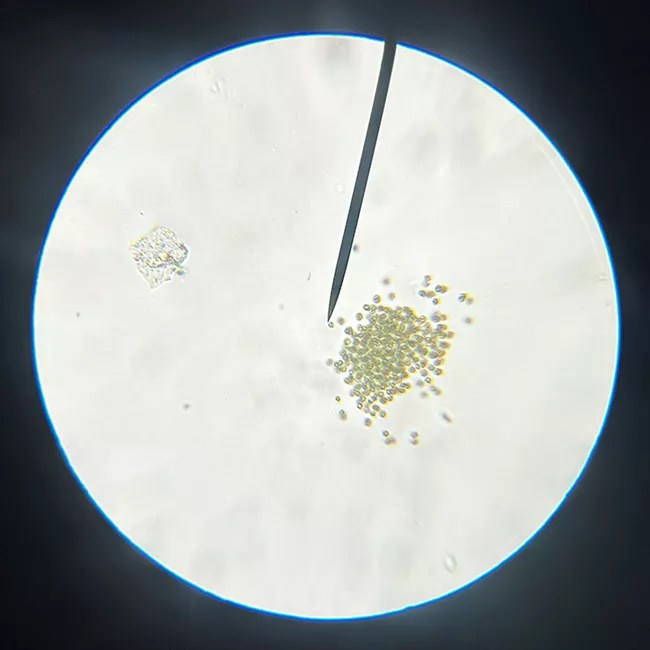
As summer temperatures spike, conditions are right for algae to bloom. Algae are photosynthetic members of the kingdom Protista. Because they photosynthesize, they produce oxygen and consume carbon dioxide. They form an important base for the food chain in aquatic environments and are ubiquitous in nearly every type of water, displaying amazing diversity in the environments where they persist. As temperatures rise across New Mexico, cyanobacteria, commonly known as blue-green algae, can thrive in warmer waters.
Algae really are amazing. Ever seen an image of a kayak gliding across the water at night with a beautiful blue glow trailing behind? Bioluminescent algae did that. Kelp beds on the West Coast, which provide critical habitat to abalone, fish nurseries and sea otters, are also algae.
During seasons with plenty of nutrients, water mixing from wind or rain and high temperatures, algae can bloom or reproduce rapidly. Imagine when your garden starts to warm up and get some rain — plants get happy, and magic happens! It’s the same for algae.


Photos Courtesy National Park Service
Why are we talking about algae?
It’s no secret that it’s been hot here, y’all. High temperatures in lakes and other freshwater bodies with high nutrient loads have created productive conditions for cyanobacteria, or blue-green algae. Cyanobacteria are not true algae but photosynthetic bacteria. Cyanobacteria blooms can form floating mats or scum on the water surface. They can also look like long hairs linked together. This is different from an aquatic plant which has leaves, stems and roots and are much larger than most algae.
Not all blooms are harmful, but certain algae contain toxins which can be harmful to fish, wildlife, pets and people. New Mexico Environment Department (NMED) has created an interactive tool to monitor lake conditions for harmful algae blooms (HABs).
There is a lot of good information on NMED’s webpage about HABs, including a helpful FAQ page that is a great resource for anglers and nonanglers alike. There’s even a way for anglers to report a suspected HAB. Concerned citizens and watchful anglers have great impact by serving as extra eyes and ears on the water.
Can I still go fishing?
Most anglers want to know if they can continue to fish in water where there is an active bloom and if those fish are safe to keep. NMED’s best answer is: if you are in doubt, stay out.
Check the NMED tool before your fishing trip, and use their helpful FAQs if you have questions.
There just isn’t enough trusted data on the risk of eating fish caught in waters with an active HAB. We know that toxins can accumulate quickly in invertebrates like bivalves and crawfish, and in the filtration organs like the liver of bony fishes. If you really want to keep and eat your catch, only keep the filet — skip the fat, liver and crawfish appetizers.
And remember, while a HAB isn’t as attractive as a blooming garden, it most certainly is just as seasonal. This too shall pass, fish friends. Conditions will shift away from those that are no longer favorable to the blue-green algae, and the bloom will die. Until then, stay informed, stay safe and maybe change fishing spots for a minute.
You must be logged in to post a comment.