


The capsule was ceremonially buried July 4 at Independence National Historical Park in Philadelphia, near Independence Hall and the Liberty Bell. It is scheduled to remain underground until July 4, 2276 — the 500th anniversary of the United States.
By Levi Gwaltney for Las Cruces Digest
Sources: NMSU Newsroom (Azure Mitchell), Library of Congress (Brett Zongker and Deb Fiscella)
Photos: Courtesy
Cover Photo: America250’s “America Time Capsule” moments before being buried for another 250 years at the Independence National Historical Park in Philadelphia. (Photo by Jennell Juarez)
Two recent New Mexico State University art graduates have created pieces intended for an audience none of us will live to meet.
Johanna Typaldos, a 2025 MFA graduate, and Jennell Juarez, a 2025 BFA graduate, were selected by the New Mexico Department of Cultural Affairs to contribute artwork representing the state in America’s Time Capsule, created as part of the nation’s 250th anniversary commemoration.
The capsule was ceremonially buried July 4 at Independence National Historical Park in Philadelphia, near Independence Hall and the Liberty Bell. It is scheduled to remain underground until July 4, 2276 — the 500th anniversary of the United States.
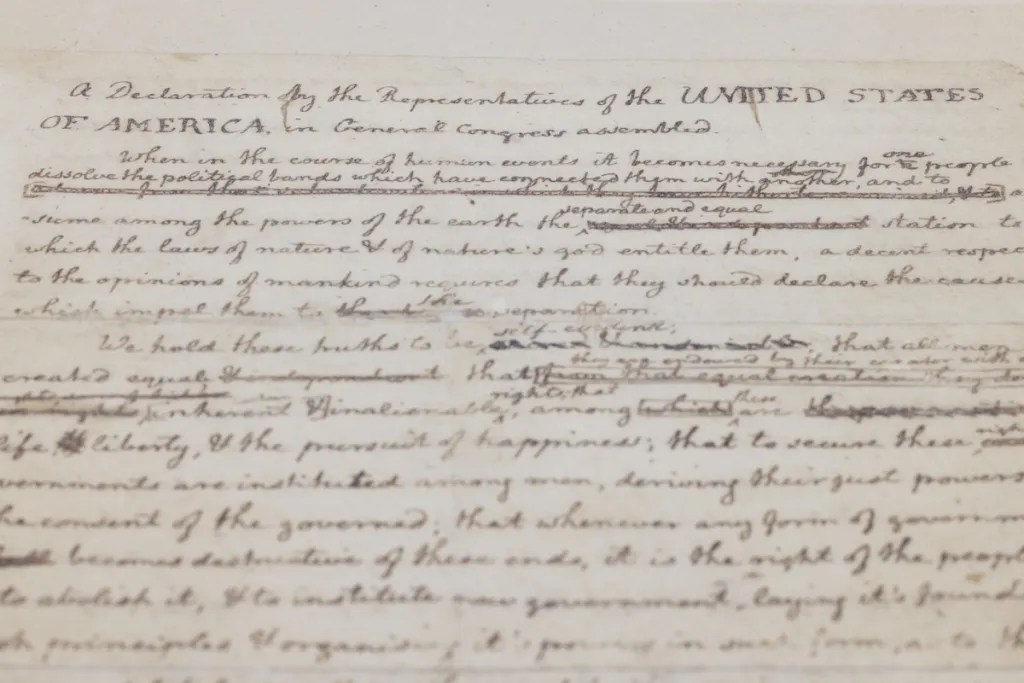
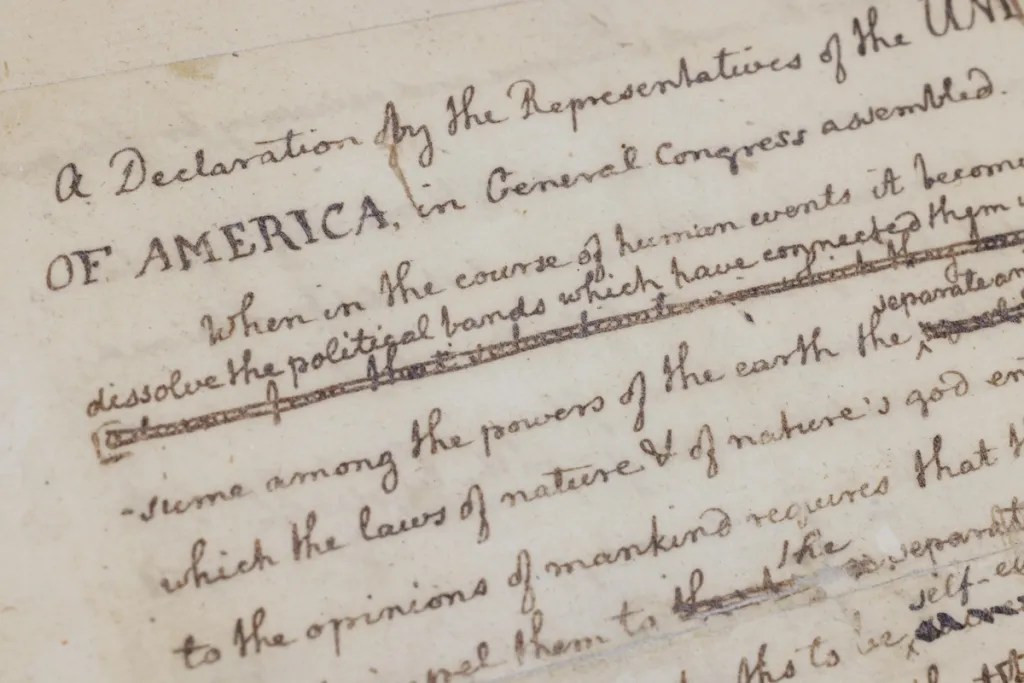
Images of Thomas Jefferson’s handwritten draft of the Declaration of Independence. (Courtesy Library of Congress)
As Azure Mitchell reported for NMSU, Typaldos and Juarez were asked to create two-by-two-inch artworks representing what New Mexico means to them. Their pieces joined 12 other items representing the state.
The result is two very small representations of New Mexico carrying distinctly local stories.
Receive the latest stories in your inbox every day — FREE!
Chile, Hands and Something Made by Hand
Juarez created a ceramic tile depicting a woman stringing a red chile ristra.
She had been given one specific request: incorporate chile — specifically capsaicin — into the piece. Juarez expanded from there, using the woman’s hands to acknowledge agricultural workers and her own family’s history.
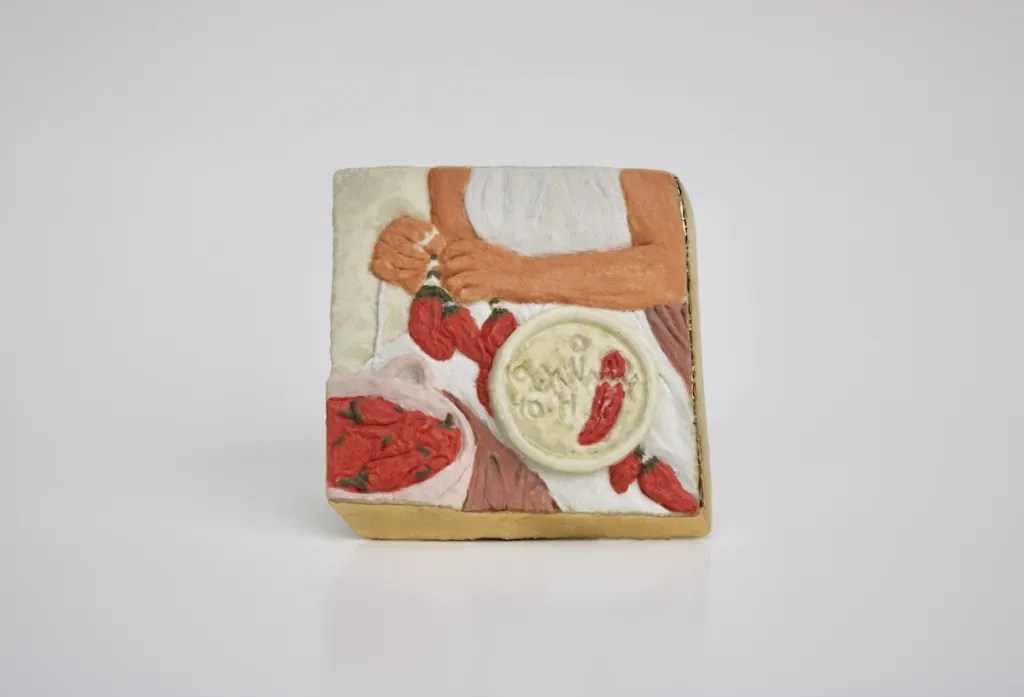
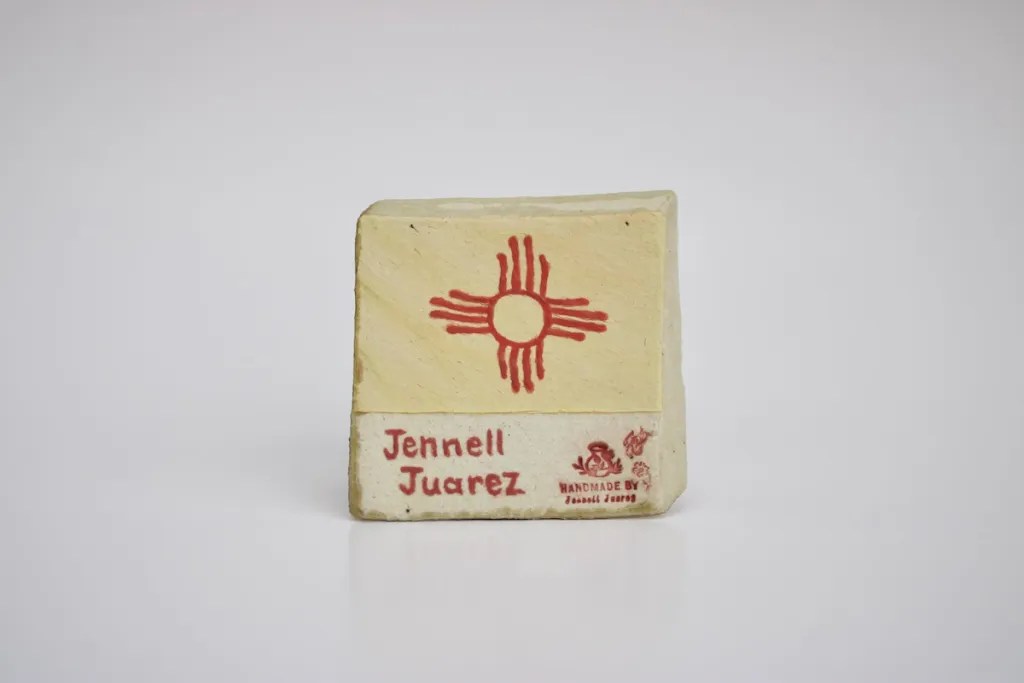
Photos by Jennell Juarez (Courtesy)
Her father had been a migrant worker, Juarez told Mitchell, and as a Mexican American woman she wanted a woman’s hand represented in the work.
The medium itself also became part of the message.
“In this day and age, with everything centered around AI and technology and stuff, I really wanted to promote that handmade and handcrafted things are still very valuable,” Juarez told NMSU.
She carved, sculpted, painted and fired the ceramic tile herself.
From Doña Ana County, With Love
Typaldos approached the assignment differently.
Material requirements presented an immediate challenge. The artwork needed to be made from a non-reactive material suitable for long-term preservation, leading Typaldos to work with aluminum — a material outside the usual metals used in her jewelry work.
She ultimately created an aluminum relief of New Mexico containing all 33 counties. Doña Ana County is distinguished from the others by a change in color, marking the place where the artwork originated.
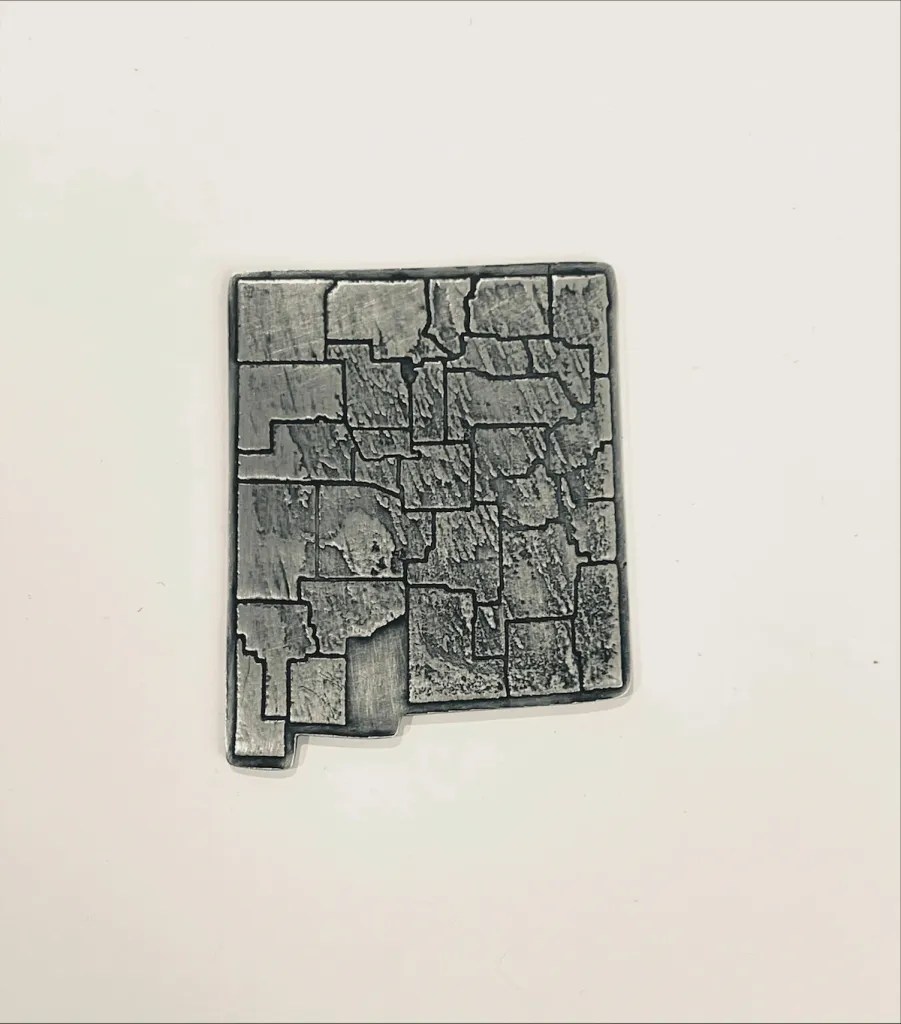
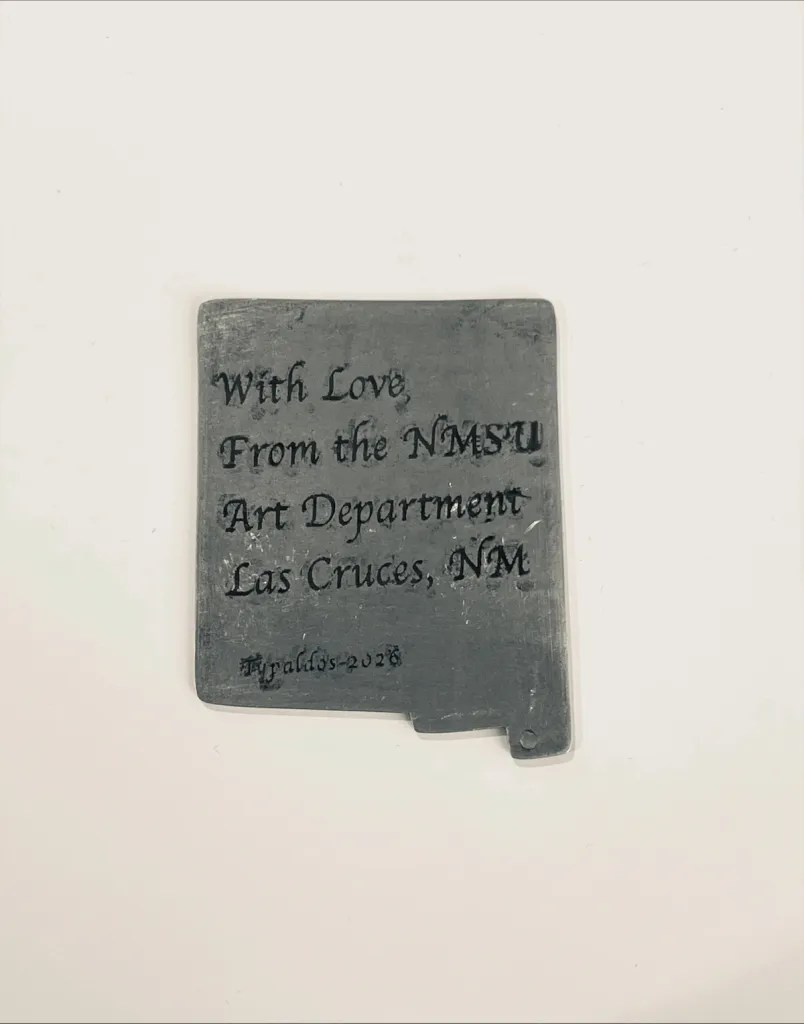
Photos by Johanna Typaldos (Courtesy)
Typaldos also used the reverse of the piece to document its origin for whoever eventually encounters it. “With love, from the New Mexico State Art Department,” she inscribed on the back.
Both artists credited their experiences in NMSU’s Art Department with helping prepare them for the unusual assignment. Juarez, a graduate of the William Conroy Honors College, is returning to NMSU as a graduate assistant.
What Else Is Waiting for 2276?
The two NMSU graduates’ artwork is part of a much larger collection assembled to tell future Americans something about the country at its 250th anniversary.
Brett Zongker and Deb Fiscella, writing for the Library of Congress, described America’s Time Capsule as a 900-pound stainless-steel cylinder protected by a 1,100-pound stainless-steel bell jar and buried 10 feet underground.
States and territories contributed objects, as did all three branches of the federal government and other institutions. Among the contributions are letters, documents and memorabilia — and one object that approaches the idea of a time capsule very differently.
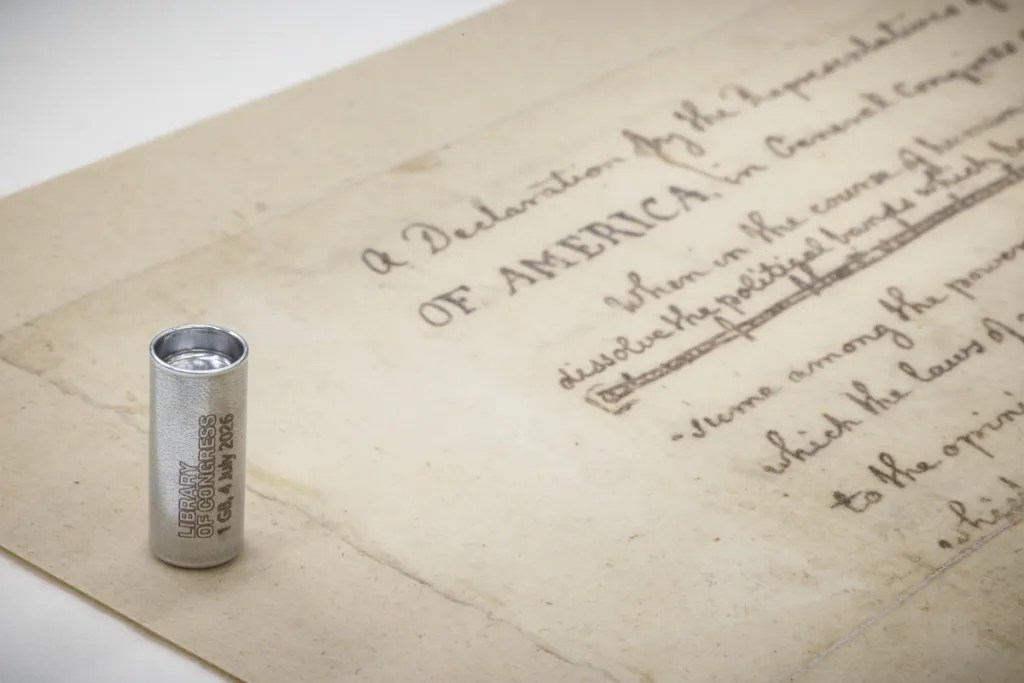
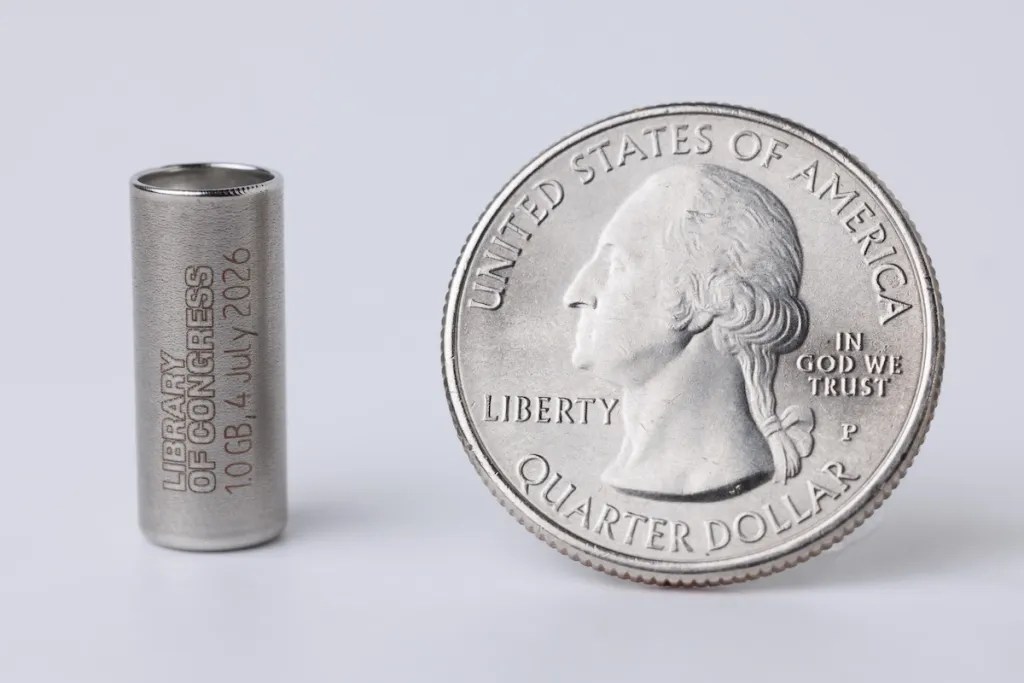
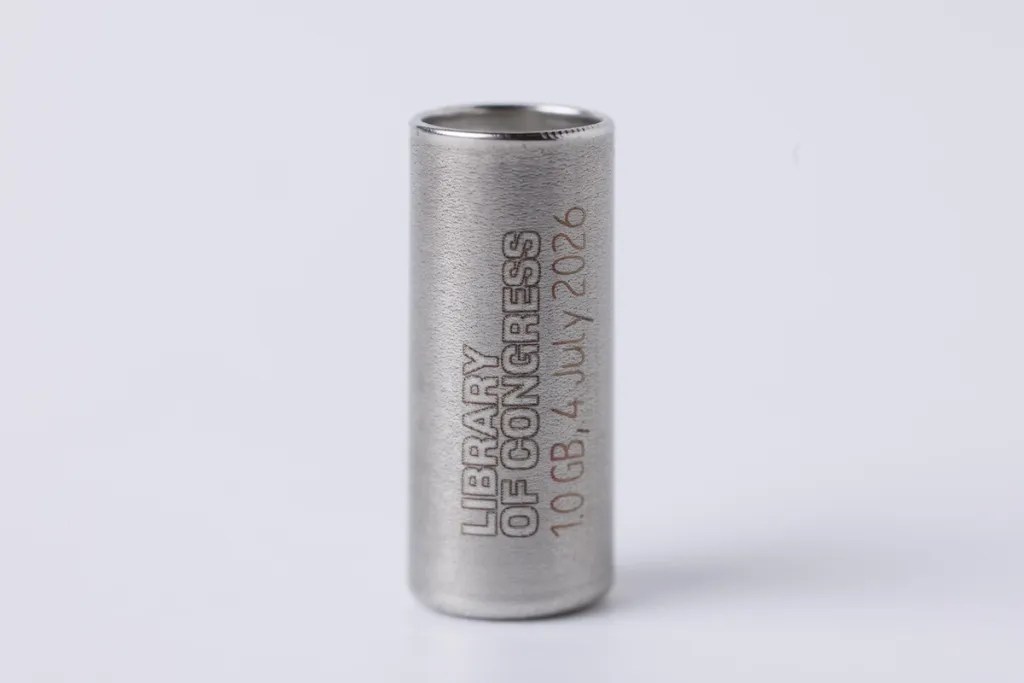
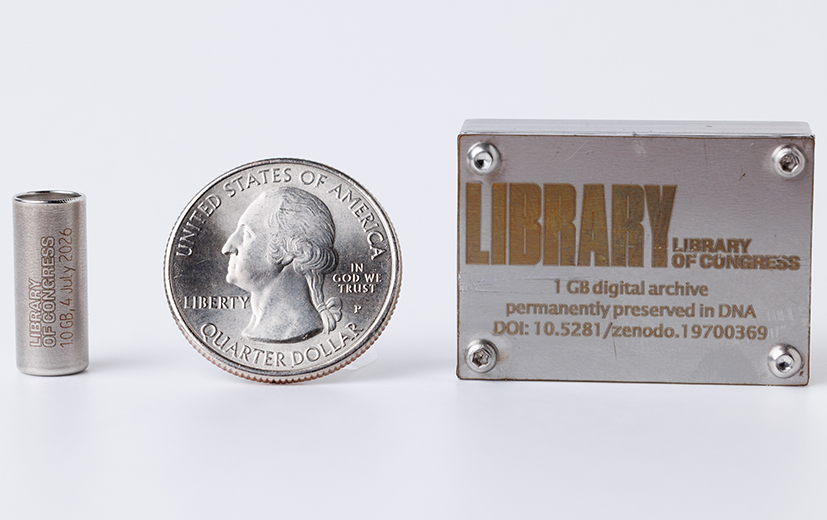
The Library of Congress contributed a metal vial approximately the length of a pencil eraser containing synthetic DNA encoded with digital copies of materials from its collections.
Working with the University of Washington’s Molecular Information Systems Lab, the Library converted selected digital information into synthesized DNA strands for long-term storage.
Among the materials encoded into the DNA are Thomas Jefferson’s rough draft of the Declaration of Independence; Francis Scott Key’s handwritten lyrics for “The Star-Spangled Banner”; an 1898 recording of the anthem by John Philip Sousa’s band; the 1791 L’Enfant plan for Washington, D.C.; the pre-1600 Codex Quetzalecatzin; 1890 audio recordings in Passamaquoddy; and congressional proceedings from 1789 through 1824.

According to Zongker and Fiscella, synthetic DNA can hold approximately nine terabytes of digital information in a single cubic millimeter and can remain durable for thousands of years with little or no maintenance or power.
A chip included with the Library’s contribution contains instructions intended to tell its future recipients how to decode the information.
Two Inches of New Mexico
Against a 900-pound capsule filled with artifacts from across the country — including an experimental molecular archive from the world’s largest library — the contributions from Typaldos and Juarez are physically tiny.

From left: Jennell Juarez, a 2025 NMSU BFA graduate, pictured in front of America250’s “America Time Capsule” and Johanna Typaldos, a 2025 NMSU MFA graduate. (Photo by Daniel Zillmann and courtesy of Johanna Typaldos)
But that was the assignment: decide what something measuring only two inches square might tell someone about New Mexico 250 years from now. Juarez chose chile, agricultural hands and the value of something handmade. Typaldos chose the shape of New Mexico, its 33 counties and a particular mark for Doña Ana County.
And somewhere beneath Philadelphia, alongside pieces of the nation’s history preserved in everything from stainless steel to synthetic DNA, two works created by recent NMSU graduates are now waiting for 2276.
You must be logged in to post a comment.