

The current operation follows executive orders signed by President Donald Trump on Jan. 20, 2025, including a national emergency declaration concerning the southern border and directions concerning the military’s role in protecting U.S. territorial integrity.
Source: Department of
DefenseWar (Based on “MI Soldiers enable JTF-SB headquarters return to Fort Bliss” By Sgt. Jerron Bruce)
Images: Courtesy
A military operation supporting federal activities along the southern U.S. border has moved an important part of its command structure back to Fort Bliss, providing an opportunity to look more closely at a mission operating within and around our broader community.
Operation Ardent Vanguard supports the Department of Homeland Security’s border mission through U.S. Northern Command, with Joint Task Force-Southern Border serving as part of that military effort.

According to U.S. Northern Command, more than 10,000 service members are deploying or have deployed to the southern border, augmenting approximately 2,500 military personnel already supporting U.S. Customs and Border Protection. The exact number fluctuates as units and personnel rotate.
The current operation follows executive orders signed by President Donald Trump on Jan. 20, 2025, including a national emergency declaration concerning the southern border and directions concerning the military’s role in protecting U.S. territorial integrity.
USNORTHCOM notes that military support for civilian border-security efforts predates the current operation. The Department of War has supported civilian law-enforcement agencies along the border since the early 1990s, including counterdrug and counter-transnational-organized-crime activities.
The command describes the current scope and magnitude of military support as similar to support provided during the Bush, Obama, Trump and Biden administrations.
What Military Personnel Are Doing
Despite the scale of the deployment, USNORTHCOM says military personnel do not directly participate in civilian law-enforcement activities.
Active-duty personnel instead provide support that includes detection and monitoring, logistics and transportation, along with repairing and placing physical barriers.


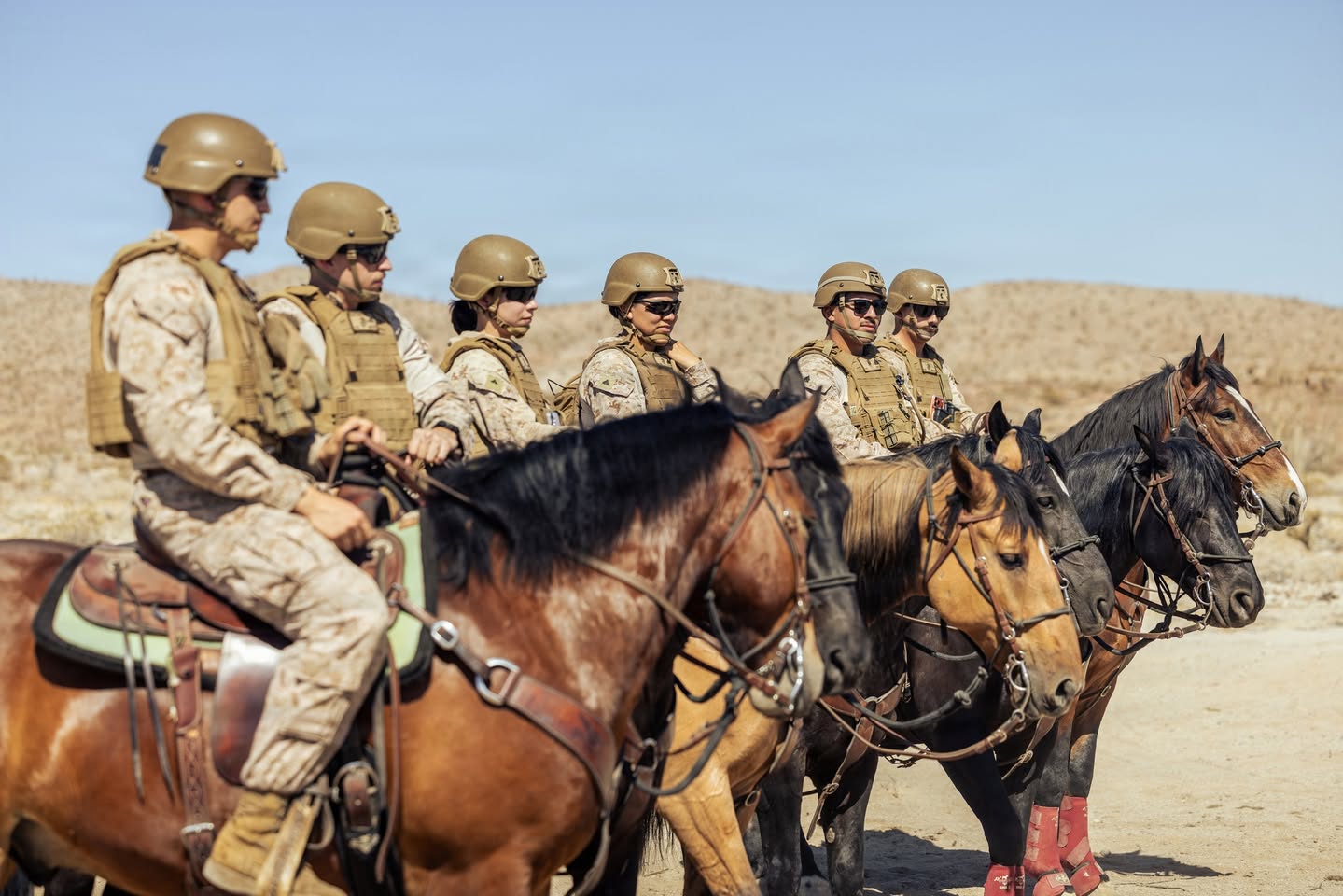
Operating under Operation Ardent Vanguard, JTF Southern Border works hand-in-hand with U.S. Customs and Border Protection and Department of Homeland Security, maintaining constant vigilance day and night to protect our southern approaches. (Photos Courtesy U.S. Northern Command via Facebook)
According to USNORTHCOM, those activities are intended to enhance CBP’s ability to prevent or impede illegal crossings, maintain situational awareness and provide an appropriate law-enforcement response.
JTF-Southern Border Returns to Fort Bliss
One piece of that operation is now transitioning closer to Las Cruces.
Joint Task Force-Southern Border has moved its headquarters from Fort Huachuca, Arizona, back to Fort Bliss, Texas, according to an Aug. 21 report by Sgt. Jerron Bruce.
The move required months of work by a small group of military intelligence systems maintainers and integrators from the Signal, Intelligence and Sustainment Company, Headquarters and Headquarters Battalion, 1st Armored Division.
Four Soldiers worked at Fort Huachuca while another three prepared facilities and intelligence infrastructure at Fort Bliss, allowing systems supporting the mission to remain operational during the transition.

The work included preparing networks and facilities, establishing security requirements for classified systems, providing communications capabilities and determining which systems would be needed as the headquarters shifted locations.
The move also places JTF-Southern Border at an installation where personnel can work directly with Fort Bliss and 1st Armored Division organizations and make use of the division’s existing equipment and infrastructure.
Building for a Continuing Mission
The transition is not being described as the conclusion of Joint Task Force-Southern Border’s work.
Chief Warrant Officer 3 Dusty McSpadden, who led the forward team at Fort Huachuca, described the work there and now at Fort Bliss as preparation for a longer-running operation.
“What we were doing in Fort Huachuca and what we’re doing here is setting the stage for this to be a continuous mission until 2030,” McSpadden said.
For some of the Soldiers involved, Operation Ardent Vanguard has also provided an opportunity to use military intelligence systems in an operational environment rather than solely during exercises and simulations.
With the headquarters now back at Fort Bliss, McSpadden described the mission in straightforward terms:
“For us to be here at home station with our equipment, with our families close; doing a mission that’s going to have an impact over the next couple of years,” McSpadden said. “This is the nation calling us. This is us doing our job.”
The return of JTF-Southern Border to Fort Bliss places that continuing military mission within the immediate Las Cruces-El Paso region, while providing additional context for the personnel, equipment and military activity residents may encounter as Operation Ardent Vanguard continues.
You must be logged in to post a comment.