

U.S. Northern Command announced that military C-130 aircraft equipped with Modular Airborne Fire Fighting Systems, or MAFFS, have dropped more than 1 million gallons of fire retardant during the 2026 fire season.
Source: U.S. Northern Command (via Facebook), and others
Images: Courtesy
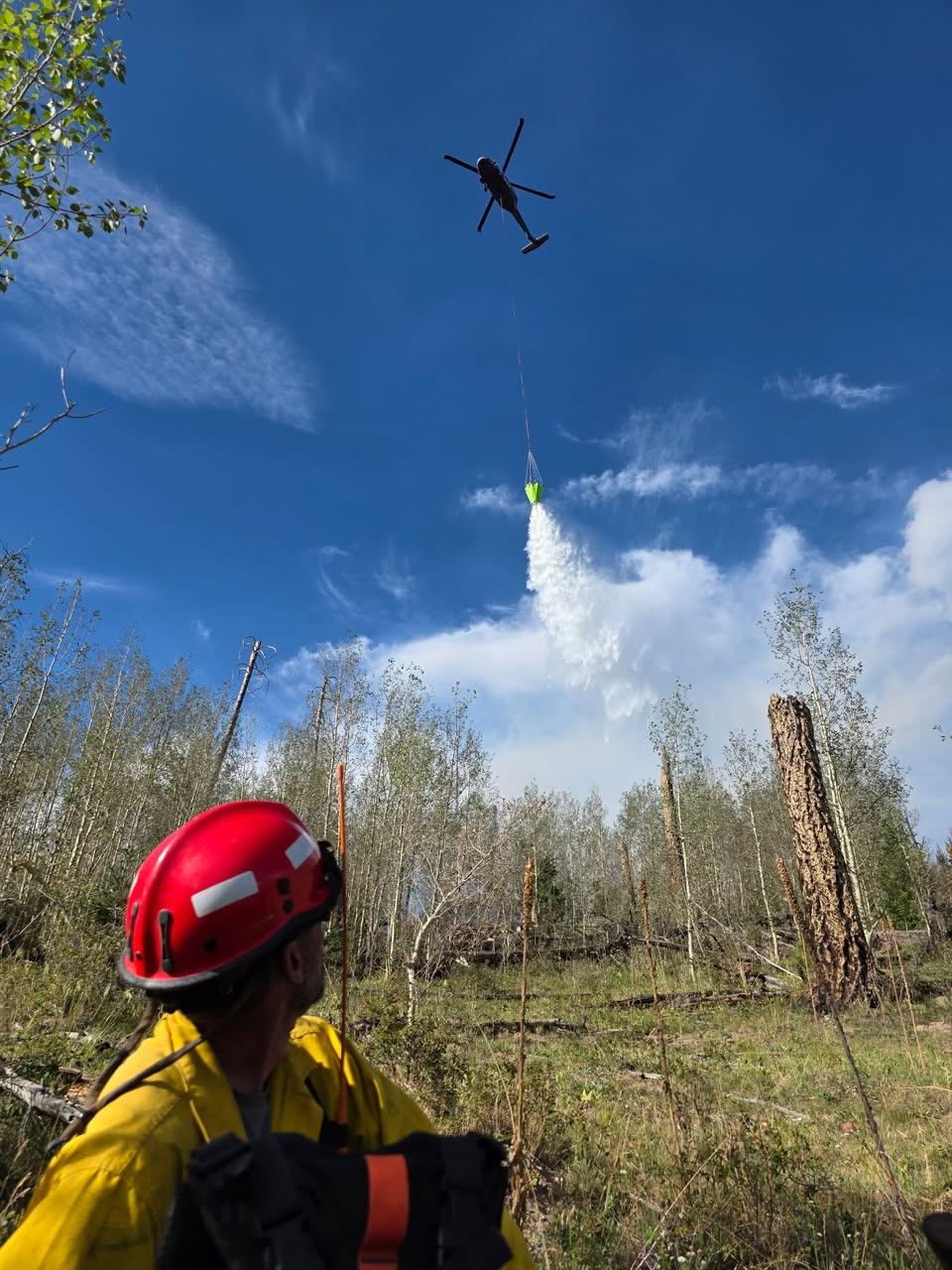
Cover Photo Caption: A helicopter supports operations in the Frijoles Fire area. Aircraft are one option for moving personnel, equipment, water, or an injured firefighter when terrain limits ground access.
Wildfire season continues across New Mexico as September begins, with hundreds of firefighters working active fires from the Pecos Wilderness to the Manzano Mountains.
Above them, another part of the firefighting effort has passed a milestone.

U.S. Northern Command announced that military C-130 aircraft equipped with Modular Airborne Fire Fighting Systems, or MAFFS, have dropped more than 1 million gallons of fire retardant during the 2026 fire season.
The aircraft are supporting the National Interagency Fire Center through a Defense Support of Civil Authorities mission involving the Air National Guard, Air Force Reserve and other federal, state and local partners.
The milestone comes as wildfire activity remains elevated nationally. The National Interagency Fire Center reported 140 new fires Monday, including seven new large fires. More than 21,000 firefighters and support personnel were assigned to 87 large fires across the country as of Tuesday.
In New Mexico, aircraft remain an important part of operations on several active fires.
Whiskey Fire
A Type 1 helicopter has been working alongside ground crews on the Whiskey Fire in the Manzano Mountain Wilderness, targeting areas where the fire crossed a ridgeline into New Canyon.
The lightning-caused fire was reported Aug. 21 and had grown to 370 acres with no containment in the Forest Service’s Aug. 31 update. A total of 138 personnel were assigned to the fire.

Helicopter crews concentrated water drops on active portions of the perimeter while firefighters constructed and secured handline. On the eastern side of the ridge, crews connected handline with the existing New Canyon Trail and a rock scree field to create barriers to further spread.
When activity increased in the Jaramillo and Whiskey Spring drainages, the helicopter was again used to check the fire’s movement.
Crews have also completed contingency line near the Comanche Trailhead, while Valencia County water tenders have been supplying portable tanks used to support helicopter operations.
The fire received substantial precipitation Monday evening.
Smoke may remain visible from communities including Belen, Bosque Farms, Los Lunas, Mountainair, Peralta and Valencia.
Frijoles Fire Reaches 59% Containment
Farther north, firefighters continue making progress on the Frijoles Fire, which has burned 15,451 acres since it was started by lightning Aug. 4 east of Cundiyo.
The fire was 59% contained Tuesday with 536 personnel assigned.
Scattered showers and thunderstorms brought additional moisture Monday. Although the fire’s acreage increased, officials reported that activity remained largely within its existing footprint, with some growth near the Frijoles drainage.


Cundiyo, Cerro Piñon and Borrego Mesa have returned to “Ready” evacuation status, and no communities in Santa Fe or Rio Arriba counties were under “Set” or “Go” status Tuesday.
NM 503 remains restricted to residents and emergency personnel in the affected area, and closures remain in effect within portions of the Santa Fe National Forest and Pecos Wilderness.
A community meeting is scheduled for 6 p.m. Wednesday, Sept. 2, at the Truchas Community Center.


The rugged terrain of the Frijoles Fire has also required specialized personnel to protect the firefighters themselves.
A four-person Type 1 Rapid Extraction Module Support team, or REMS, was recently embedded with the Tahoe Hotshots while the crew constructed handline in the Pecos Wilderness.
REMS personnel are trained in both emergency medicine and technical rope rescue and can reach and extract injured firefighters from canyons, steep slopes and other areas where conventional ambulance access is impossible.
Sunset Fire Winds Down
Operations are scaling back on the Sunset Fire west of Arabela in the Capitan Mountain Wilderness.
The lightning-caused fire was reported Aug. 19 and stood at 145 acres and 62% containment in the most recent update. Firefighters reported no movement, new growth or interior smoke Sunday.
Command of the fire has transferred to a Type 4 incident commander as operational needs decrease. No structures are threatened and no evacuations or closures are currently in place.
A Type 3 helicopter and two engines remained assigned to the fire.
Mogote Ridge Fire
Firefighters also continue working the Mogote Ridge Fire between Canjilon and El Rito in Rio Arriba County.
Crews have been constructing hand and dozer control lines as the fire burns through mixed conifer and aspen, primarily smoldering along the forest floor with occasional individual or groups of trees torching.
The Continental Divide National Scenic Trail and two Forest Service roads have been closed in the immediate area, with a trail reroute established for public safety.
Fire officials said regular updates will now end unless activity changes significantly.
“If You Fly, We Can’t”
As aircraft work fires across New Mexico and the nation, fire officials are again asking the public to keep personal drones away from wildfire operations.
The National Interagency Fire Center reported 74 drone incursions near wildfires nationwide so far this year.

An unauthorized drone entering wildfire airspace can force helicopters and other firefighting aircraft to immediately stop operating until the airspace is cleared. Even a small drone can severely damage an aircraft or endanger its crew.
Temporary flight restrictions remain in effect over several active fires, including Frijoles and Sunset.
The warning from wildfire agencies is simple:
“If you fly, we can’t.”
You must be logged in to post a comment.