
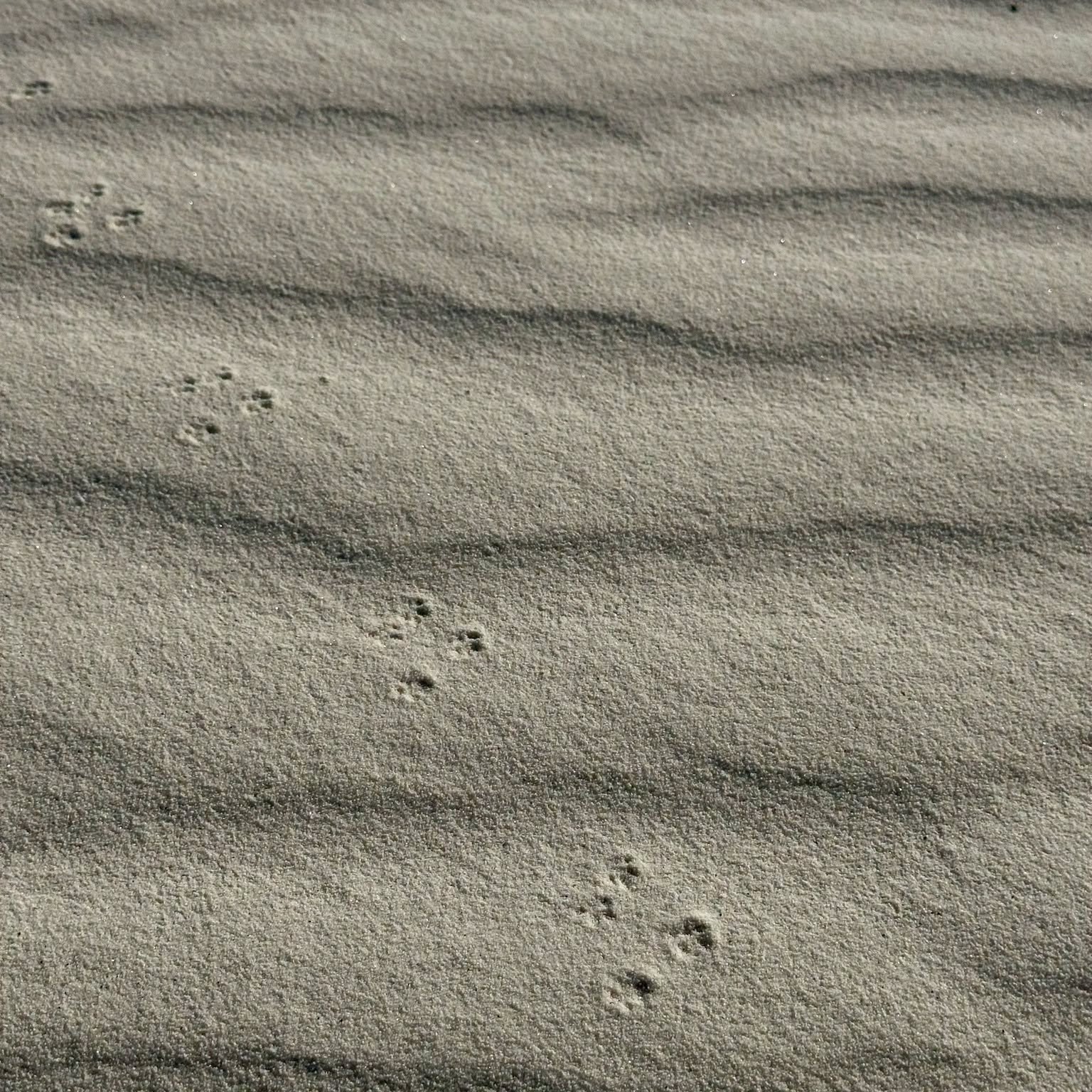

Tracks are often visible near the Dune Life Nature Trail before wind and weather erase the details.
Source: White Sands National Park (via Facebook)
Photos: Courtesy NPS
Some of the smallest tracks at White Sands National Park belong to one of its year-round residents.
The Apache pocket mouse emerges after dark to forage for seeds, leaving tiny footprints behind in the gypsum sand. The mouse gets its name from expandable cheek pouches used to carry food, including seeds that may be stored for later use.

NPS photo/Allison G
The species is especially well adapted to the dry environment. According to the park, Apache pocket mice can obtain the moisture they need from food and may go for months without drinking water.
Early morning is one of the best times to spot evidence of their nighttime activity. Tracks are often visible near the Dune Life Nature Trail before wind and weather erase the details.
Depending on conditions, the prints may appear as little more than a series of tiny circles in the sand.
You must be logged in to post a comment.