
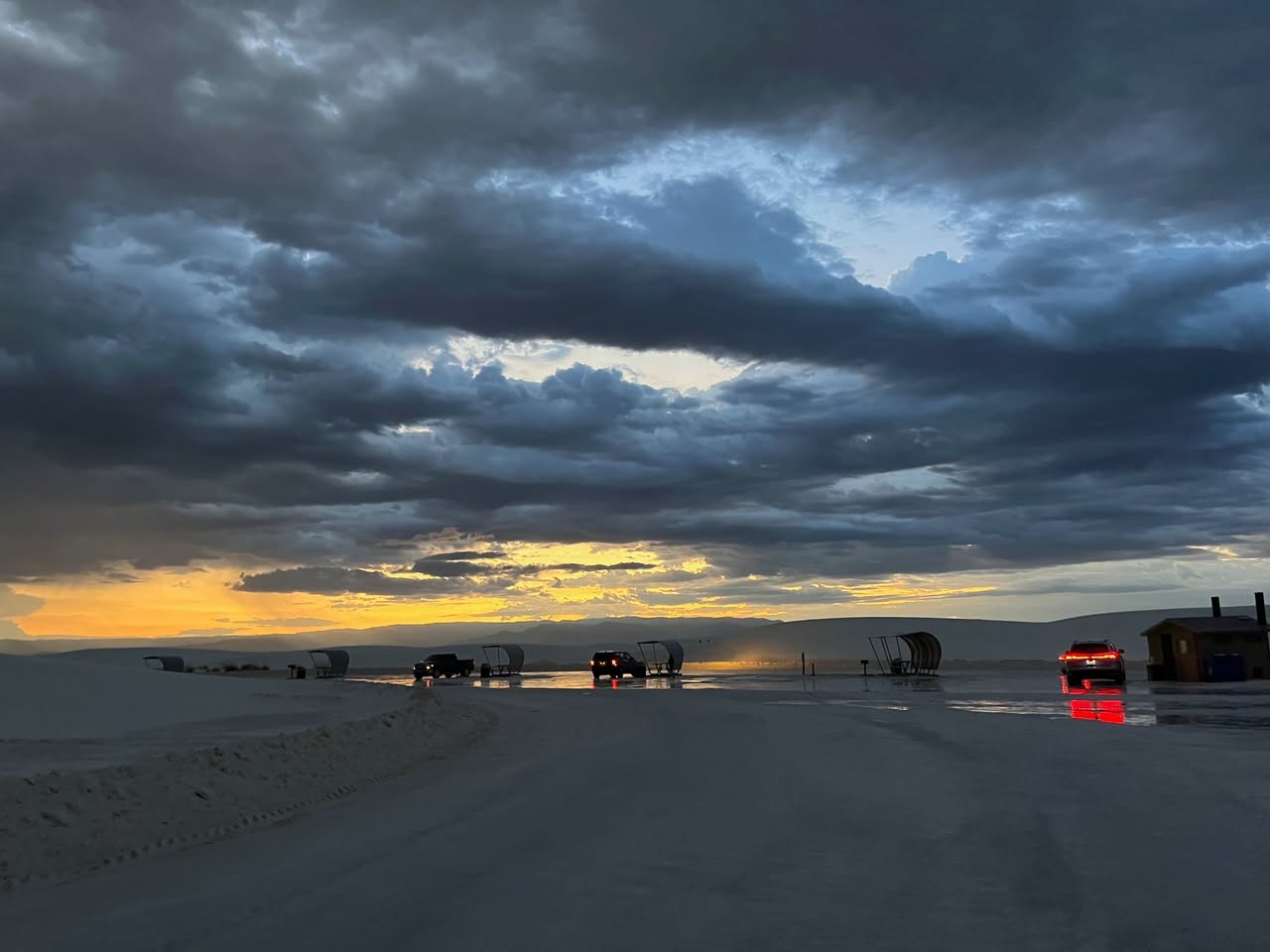

Tall clouds build up throughout the day on the Sacramento and San Andres Mountains that surround the Tularosa Basin, and storms rush into the dunes in the late afternoon and early evening.
Source: White Sands National Park (via Facebook)
Courtesy Photos By NPS Photos/ Rebekah H.
Every year from July to September, White Sands National Park receives most of its 10 inches of rain per year in the form of summer monsoon storms. Monsoon storms build when cool, moist air from the Pacific Ocean and Gulf of Mexico meet hot, dry air further inland.


Tall clouds build up throughout the day on the Sacramento and San Andres Mountains that surround the Tularosa Basin, and storms rush into the dunes in the late afternoon and early evening. This rain is very important to the plants and animals who manage to live in the harsh environment of the gypsum sand dunes.

Monsoon storms tend to be small, but they can move very quickly. Always check the weather before hiking. If you are in the dunes and you see lightning or hear thunder, you should get into your vehicle as soon as you can. You do not want to be the tallest thing on the dunes when the storm arrives!
You must be logged in to post a comment.