
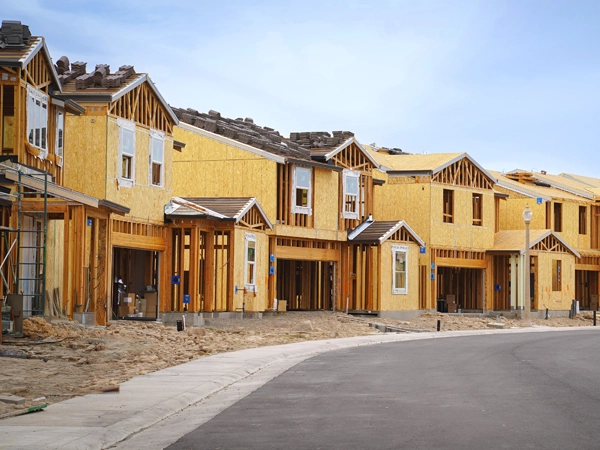

Japan adopted housing system certification in 1973 that offers lessons for the U.S. housing industry.
Source: Housing and Urban Development
Photo: Courtesy
Cover Photo Caption: During a session at the National Institute of Building Sciences 2026 Building Innovation conference, panelists explored the benefits of a Housing System Certification Program Standard to streamline permitting, speed housing production, and reduce costs.
To help housing supply keep pace with rising demand, builders and other housing industry experts are proposing alternatives to traditional building permitting processes. On May 19 and 20, the National Institute of Building Sciences (NIBS) held its 2026 Building Innovation conference, which included several panels with industry experts, manufactured housing builders, engineers, architects, researchers, and academics. During the Streamlining Housing Approval Through System Certification session, panelists highlighted the potential benefits of a Housing System Certification Program Standard to simplify permitting and speed housing production in the United States. Ivan Rupnik, founding partner of MOD X, moderated the discussion between Vikas Enti, chief executive officer and cofounder of Reframe Systems, and Dennis Michaud, managing director of offsite solutions and residential resilience at CertainTeed/Saint-Gobain. Panelists shared how precertified housing systems can inspire innovations in construction, speed up project timelines, reduce costs, and expand housing resilience to natural disasters.
Receive the latest stories in your inbox every day — FREE!
What Is Housing System Certification?
Rupnik defined housing system certification as a “national voluntary recognition that a complete housing system — its design, components, production process, onsite assembly, and quality controls — meets a defined performance standard verified by credit bodies and recognized across jurisdictions.” Rather than the traditional approach, in which residential buildings are permitted as individual, one-off projects, jurisdictions assess structures as complete systems based on preapproved performance standards, thereby shortening permitting and inspection timelines. NIBS and MOD X have been collaborating to develop a Housing System Certification Program Standard for the United States.
Current Models
Japan adopted housing system certification in 1973 that offers lessons for the U.S. housing industry. Rupnik noted that approximately 28 percent of all housing units in Japan are housing system certified. In 2000, Japan shifted from a prescriptive code to a performance-based code based on several overarching criteria, including structural stability, resilience, degradation, thermal energy, acoustics, environment, security, fire safety, maintenance, and remodeling. These performance criteria have gradually shifted to meet the evolving needs of residents and now include building circularity, which involves natural light, energy efficiency, accessibility components, and indoor air quality. Adopting performance standards and system certification has allowed Japan to improve energy savings, durability, and accessibility to support aging in place, said Rupnik. In Japan, housing system certification also offers residents easier access to mortgages and lower property taxes. Residents can feel confident that their homes are resilient against wind, rain, and other natural elements, as certified buildings in Japan are three times more likely than uncertified buildings to withstand a natural disaster. Insurance companies also charge lower premiums for certified homes because these buildings comply with durability standards.
Traditional permitting and inspection processes in the United States can delay construction for even the most efficient builders. To avoid potential roadblocks, Reframe Systems, a Massachusetts-based modular home builder, acts as a single provider, managing every aspect of the building process, including permits, design, construction, and delivery. Reframe Systems uses third-party inspectors who work under state-specific guidelines to complete permitting. Enti noted that these alternative pathways for permits and inspections help speed productivity and housing delivery. Through “matrix manufacturing,” the company simultaneously designs and builds products of varying dimensions within a factory to ensure home delivery in fewer than 100 days. Using a “pixels to parts” digital design pipeline, Reframe Systems accesses building and zoning codes to ensure compliant designs, and its software sends simplified instructions directly to builders to assemble the homes. The homes use noncombustible materials, and their fortified building envelopes strengthen airtightness. In summer 2025, the company delivered 10 homes to residents of southern California who were recovering from wildfires. Housing system certification would enable companies such as Reframe Systems to speed housing production and bring innovative construction solutions to scale.
Benefits of Adoption
Michaud noted that making housing system certification voluntary might encourage broader adoption by allowing jurisdictions to maintain authority over its use. He provided examples of existing preapproved housing components such as windows and roof trusses that have unlocked performance and design flexibility, respectively. Michaud noted how the window industry shifted from crafting artisanal windows to developing higher-performance products built to national standards to withstand wind and water. In the United States, the International Residential Code, International Building Code, and local authorities govern roof trusses to ensure their safety and durability. Builders have the freedom to design the type of roofing to cover the trusses, which can vary in style and shingle type. Property owners can build their preferred roof design “using the truss, and [know] it’s going to be safe,” said Michaud. Housing system certification offers a pathway to increase housing affordability, choice, and durability — attributes that appeal to residents and builders alike.
Housing system certification can also make permitting more predictable and inspire innovation. The current U.S. landscape requires builders seeking permits to undergo several phases, including reviews of the structure, building envelope, and operating systems. Each of these steps, said Michaud, requires upfront costs and time to build the home “before the inspectors will come in and tell you whether or not that house is able to be occupied.” This process can stifle innovation because builders may be hesitant to experiment with new components and opt instead for tried-and-true components that they know have been approved in the past. Housing system certification gives builders “certainty in advance” that their innovative construction methods or new designs would be allowed, said Michaud.
Looking Ahead
The NIBS Housing System Certification Program Standard will launch by the end of 2026 as a voluntary method for local permitting authorities to assess replicable housing systems rather than one-off projects. In traditional residential construction, builders often begin construction without knowing in advance whether housing components will pass inspection. Housing systems certification approves buildings ahead of construction, mitigating this uncertainty and eliminating the possibility of human error that a traditional inspection process can incur. Housing system certification also can boost confidence among authorities, residents, insurance companies, and builders that housing is sturdy and durable enough to withstand natural disasters. The faster approvals and improved predictability of certified systems can scale offsite construction methods to increase housing supply.
Published Date: 17 September 2026
The contents of this article are the views of the author(s) and do not necessarily reflect the views or policies of the U.S. Department of Housing and Urban Development or the U.S. Government.
You must be logged in to post a comment.