
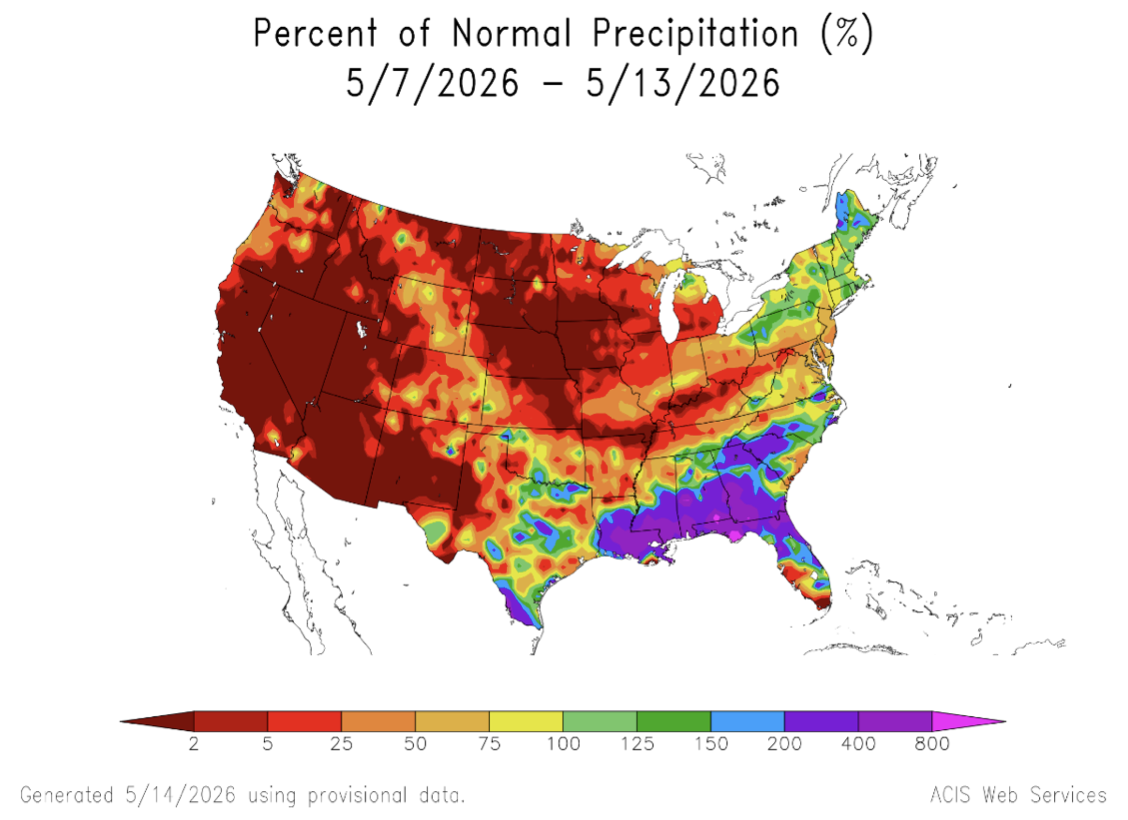

According to the latest water and climate outlook from the U.S. Department of Agriculture’s Natural Resources Conservation Service, many western watersheds are expected to see below-normal streamflow through the spring and summer due to weak mountain snowpack and accelerated snowmelt.
Source: U.S. Department of Agriculture’s Natural Resources Conservation Service, USDA Farm Service Agency
As drought conditions continue worsening across much of the western United States, new federal forecasts warn that rivers and streams throughout the region could experience some of their lowest seasonal flows on record this year.
According to the latest water and climate outlook from the U.S. Department of Agriculture’s Natural Resources Conservation Service, many western watersheds are expected to see below-normal streamflow through the spring and summer due to weak mountain snowpack and accelerated snowmelt.

For much of the West, officials say mountain snowpack remained well below seasonal averages and melted weeks earlier than normal, raising concerns for agriculture, municipalities, recreation, wildlife habitat and power generation.
“Many of the rivers are likely to experience well-below median streamflows, which may rival the lowest flows on record for the region,” the report stated.
Receive the latest stories in your inbox every day — FREE!
The warning comes as drought conditions continue intensifying across broad portions of the western United States, including parts of New Mexico.
A separate National Drought Summary issued May 12 described the western United States as “exceptionally dry,” with many areas west of the Rocky Mountains receiving less than one-tenth of an inch of rainfall during the reporting period.
While eastern portions of New Mexico experienced somewhat cooler conditions than much of the West, forecasters noted that widespread heat and minimal precipitation continue stressing western landscapes overall.
The drought outlook is already translating into federal disaster designations across New Mexico.
On May 14, the United States Department of Agriculture designated multiple New Mexico counties as natural disaster areas tied to worsening drought conditions, opening the door for certain emergency assistance programs and agricultural loans through the Farm Service Agency.
Doña Ana County was listed among the primary eligible counties under one of the federal drought disaster designations. Other southern New Mexico counties included Luna, Grant, Hidalgo, Otero, Sierra, Lincoln, Eddy, Lea and Chaves counties.
According to the USDA, eligible producers may qualify for emergency loans intended to help operations recover from drought-related losses, replace livestock or equipment, reorganize farming operations or refinance certain debt obligations.
Federal officials said the designations were triggered by sustained severe to exceptional drought conditions documented through the U.S. Drought Monitor during the growing season.
Low streamflow forecasts are particularly concerning for areas dependent on direct surface water access rather than reservoir storage systems. Federal officials warned that water shortages are anticipated in numerous locations as summer approaches.
The drought outlook also carries implications for wildfire season.
Dry vegetation, persistent warmth and limited moisture have already contributed to elevated fire danger across parts of the West, including New Mexico, where state officials recently declared emergency drought and severe fire conditions statewide amid ongoing wildfire activity including the Seven Cabins Fire.
Though portions of the Pacific Northwest may receive some temporary relief from incoming storm systems, federal drought monitors indicated conditions across much of the western interior remain highly vulnerable heading into the hottest months of the year.
You must be logged in to post a comment.