
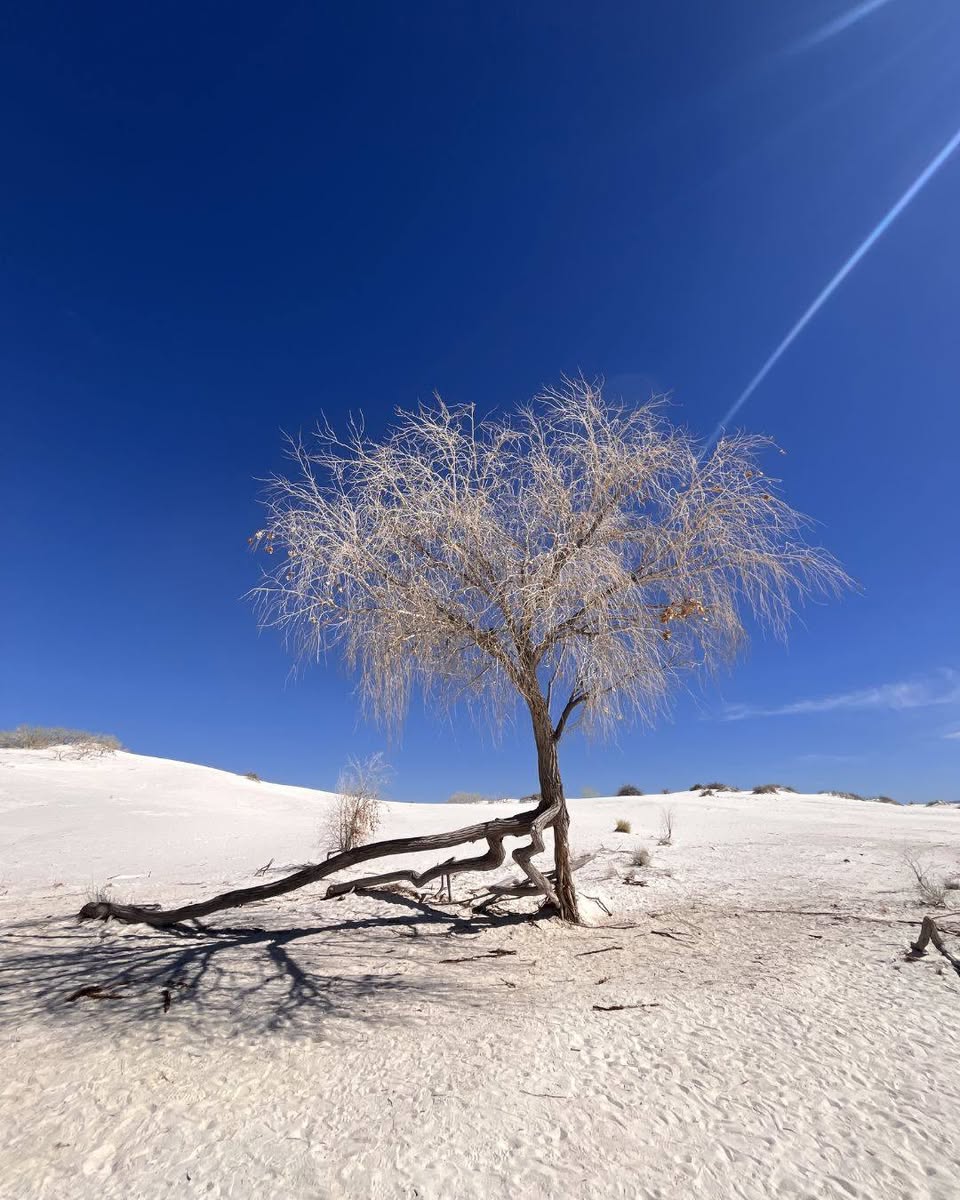
In a recent educational post shared by park rangers, officials used the iconic cottonwood tree to illustrate just how precious — and fragile — fresh water can be within the gypsum dune field.
Source: White Sands National Park (via Facebook)
Original Post by Ranger Rebekah and Ranger David
Photos: Courtesy National Parks Service/Ranger Rebekah and Ranger David
As temperatures begin climbing across southern New Mexico, rangers at White Sands National Park are reminding visitors that one of the most important pieces of gear they can bring into the desert is also the simplest: water.
In a recent educational post shared by park rangers, officials used the iconic cottonwood tree to illustrate just how precious — and fragile — fresh water can be within the gypsum dune field.


“The cottonwood tree is frequently referred to as a beacon in the desert; they are a sign that fresh water is near,” Rangers Rebekah and David explained in the park’s contribution.
According to the rangers, the cottonwoods at White Sands survive by relying on pockets of fresh rainwater trapped within the dunes themselves. That water is surprisingly young — often less than 50 years old — compared to the highly saline groundwater deeper below the dunes, which may be hundreds of years old and unsuitable for both people and trees.

While the trees have adapted to survive the shifting dunes by sending out new shoots toward fresh water sources, humans visiting the park do not have the same luxury.
“While the cottonwood may be able to find its own water source within the dune field, you will not be able to,” the rangers warned.
Park officials recommend visitors bring at least one gallon of water per person when entering the park, particularly as daytime temperatures continue climbing toward the extreme summer heat that regularly blankets the Tularosa Basin.
The post also highlighted the remarkable resilience of the cottonwood groves themselves. As dunes slowly migrate across the landscape, the trees effectively “move” with them by cloning themselves through new shoots that establish closer to available fresh water.
Even after an older tree dies, newer growth can continue surviving and migrating through the ever-changing dune field for generations.
The park’s message ultimately served as both a practical safety reminder and a reflection on desert resilience.
“Despite the ever shifting landscape the cottonwood tree reminds us to be unwavering in the face of change, and to seek change as an opportunity to build strength,” the rangers wrote.
With summer approaching, hydration remains one of the most critical safety concerns for visitors exploring the dazzling but unforgiving white gypsum dunes.
You must be logged in to post a comment.