

UPDATE — The Santa Teresa livestock crossing remains closed to livestock imports following a visit by U.S. Agriculture Secretary Brooke Rollins that had been expected to include an announcement concerning the port’s reopening.
Source: U.S. Department of Agriculture, New Mexico Department of Agriculture
Photos: Courtesy
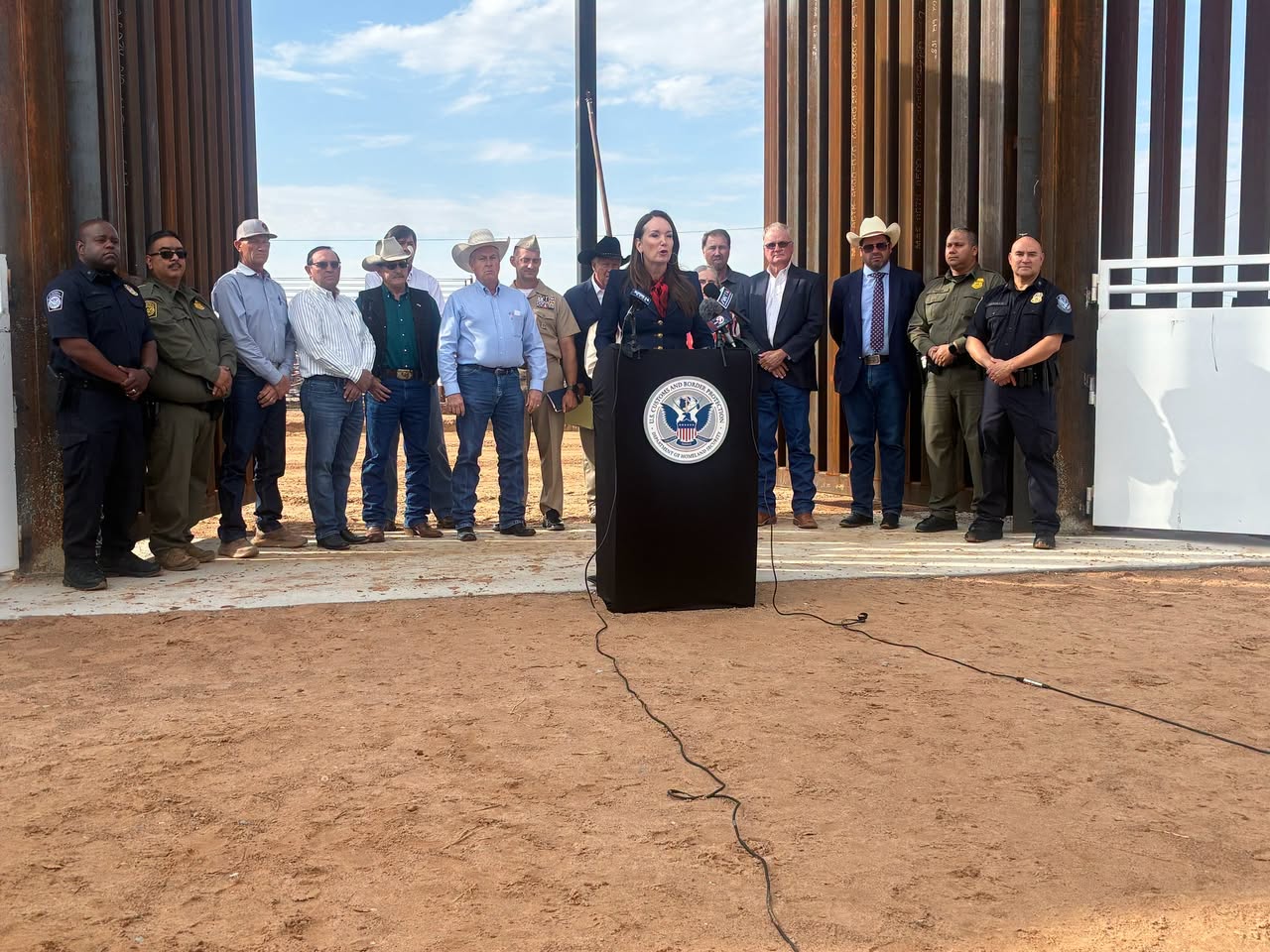
Cover Photo Caption: New Mexico Secretary of Agriculture Jeff Witte joined USDA Secretary Brooke Rollins, and state and federal partners, at the Santa Teresa Livestock Crossing to discuss New Mexico’s role in protecting the nation’s livestock industry from New World screwworm. The visit highlighted the importance of continued surveillance, collaboration and layered safeguards as the U.S. works toward the safe resumption of livestock trade. (Courtesy New Mexico Department of Agriculture via Facebook)
SEE: Cattle Cross at Santa Teresa as Livestock Trade Resumes After Screwworm Closure
Rollins visited the Santa Teresa Cattle Crossing Thursday with New Mexico Secretary of Agriculture Jeff Witte and other state and federal officials to discuss New Mexico’s role in protecting the livestock industry from New World screwworm.
Ahead of the visit, a USDA media advisory described Rollins as traveling to southern New Mexico to announce the reopening of the Santa Teresa port as part of a phased restoration of livestock trade. No reopening was announced during the visit.

Current information from USDA’s Animal and Plant Health Inspection Service continues to list the reopening date for Santa Teresa as “to be determined.”
The federal agency reopened the Douglas, Arizona, crossing Aug. 24 under new inspection protocols and has said it will consider reopening Santa Teresa and Columbus after evaluating the Douglas operation, changes in animal-health risk and Mexico’s progress under a joint action plan.


The situation in New Mexico also changed Thursday with confirmation of the state’s second New World screwworm case.
Receive the latest stories in your inbox every day — FREE!
New Mexico animal health officials confirmed Sept. 17 that the parasite had been detected in a horse in Grant County. State and federal officials are expanding surveillance and fly-trapping around the affected location to determine whether additional cases are present.
A minimum 12.4-mile infested zone is being established around the location. Animals within the zone must be inspected and, when necessary, treated before being moved within or outside the area.
A larger surveillance zone will extend beyond it, with increased animal-health monitoring and fly-trapping.
Routine movement of animals to livestock auctions, fairs, veterinary appointments and recreational activities is generally not restricted, according to state officials. Movement may be delayed or modified when inspectors identify an animal whose health or wound condition presents a greater risk of spreading the pest.
“We are working as quickly as possible to increase surveillance, inspect animals and monitor for additional cases in and around the affected area,” State Veterinarian Dr. Samantha Holeck said.
The Grant County detection follows New Mexico’s first confirmed case, found in a dog in Lea County June 7. That case resulted in an infested zone and additional surveillance before USDA approved release of the zone Aug. 30 after no additional cases were detected.
New World screwworm is a parasitic fly whose larvae feed on the living tissue of animals. It can infest livestock, pets and wildlife and, more rarely, people.
New Mexico Secretary of Agriculture Jeff Witte said the immediate focus following the second detection is determining whether other cases are present.
“Our immediate focus is expanding surveillance around the affected area so we can identify any additional cases as quickly as possible,” Witte said. “Early detection and prompt reporting are critical to limiting the spread of this pest.”
For Santa Teresa, USDA’s phased reopening plan remains in place, but without a reopening date. Under the federal plan, every animal entering through a reopened southern livestock port is subject to USDA inspection for signs of New World screwworm.
You must be logged in to post a comment.