
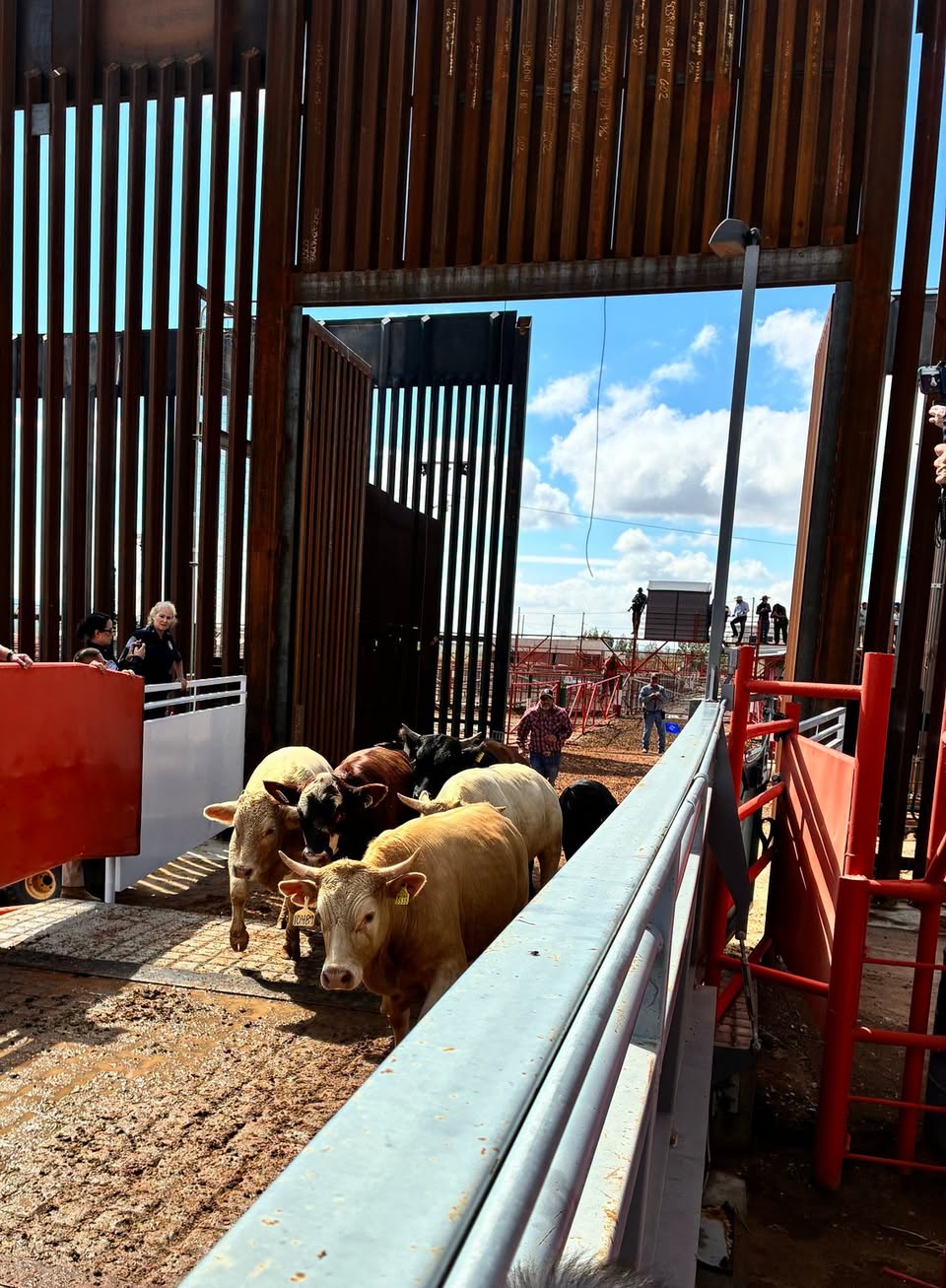

The crossing makes Santa Teresa the second U.S. livestock port to reopen as the U.S. Department of Agriculture gradually restores cattle trade with Mexico following closures intended to prevent the spread of New World screwworm.
By Levi Gwaltney for Las Cruces Digest
Source: New Mexico Department of Agriculture (via Facebook)
Photos: Courtesy
Livestock trade resumed Thursday at the Santa Teresa Livestock Crossing, completing a reopening that had remained uncertain only a week earlier as New Mexico responded to another case of New World screwworm.
Approximately 400 cattle, averaging 600 to 700 pounds, crossed into Santa Teresa on Sept. 24, according to the New Mexico Department of Agriculture.
The crossing makes Santa Teresa the second U.S. livestock port to reopen as the U.S. Department of Agriculture gradually restores cattle trade with Mexico following closures intended to prevent the spread of New World screwworm.


From anticipated reopening to uncertainty
The resumption closes a loop Las Cruces Digest has followed through several developments at the Santa Teresa crossing. (“UPDATE: Santa Teresa Livestock Port Remains Closed as New Mexico Confirms Second Screwworm Case”)
Earlier this month, U.S. Agriculture Secretary Brooke Rollins was expected to visit Santa Teresa as USDA considered the crossing for the next stage of its phased reopening plan. The first livestock crossing, at Douglas, Arizona, reopened Aug. 24.
During Rollins’ Sept. 17 visit to Santa Teresa, federal officials announced that cattle imports would resume Sept. 24. Santa Teresa is the busiest livestock inspection crossing along the U.S.-Mexico boundary, handling about 43% of Mexican cattle imports during the previous five years.
But the announcement came as animal-health officials confirmed another New World screwworm case in New Mexico — an infected horse in Grant County — adding a new complication to the state’s efforts to contain the parasite.

State and federal officials continued preparations for the reopening while investigating the Grant County case and maintaining additional surveillance and animal-health measures.
One week later, cattle were moving through Santa Teresa again.
Trade resumes under additional safeguards
Cattle entering through Santa Teresa are subject to inspection and treatment requirements before reaching the crossing in Mexico and additional USDA inspection before entering the United States.
USDA has said the phased restoration of livestock trade depends on New World screwworm conditions and animal-health safeguards on both sides of the international boundary.
New Mexico officials said Thursday the state will continue working with USDA as livestock trade resumes while maintaining measures intended to protect the state’s livestock industry.
The reopening does not end the New World screwworm response. Surveillance, trapping, sterile-fly releases and other measures remain underway as federal and state animal-health officials monitor detections in the United States and Mexico.
But after months of closure, a proposed phased reopening and a final week complicated by a new case in southwestern New Mexico, the first approximately 400 cattle crossed at Santa Teresa Thursday.
Watch for signs of New World screwworm infestation of open wounds on animals. Your awareness helps protect New Mexico’s livestock, pets and wildlife:
- Open wounds that worsen or do not heal
- Animals exhibiting restlessness, licking or biting at a wound, or isolating themselves
- Visible maggots in wounds
- Swelling, discharge, foul smell or unusual tissue deterioration
These signs may be noticed before an infestation is recognized and can be mistaken for illness, injury complications, or other health conditions. Animal owners should closely inspect any wound that is not healing normally. Anyone who observes a suspicious wound or suspects NWS should immediately contact the New Mexico Livestock Board and avoid moving the affected animal.


For more information about New World screwworm, visit screwwormnm.org. NOTE: Two cases of New World screwworm have been detected in New Mexico since June 2026. The case detected in a dog in Lea County is now inactive. The state’s only active case is in a horse in Grant County.
You must be logged in to post a comment.