

The Lucille Ball and Desi Arnaz Papers, part of the collections of the Library’s Music Division, contain two cookbooks plus a cheerful jumble of loose recipes and notes — handwritten, typed or torn from magazines and newspapers — that demonstrate their skill with a skillet.
Source: Library of Congress
—This is a guest post by Ellie Hart, an archives processing technician in the Music Division. It also appears in the November/December issue of the Library of Congress Magazine.
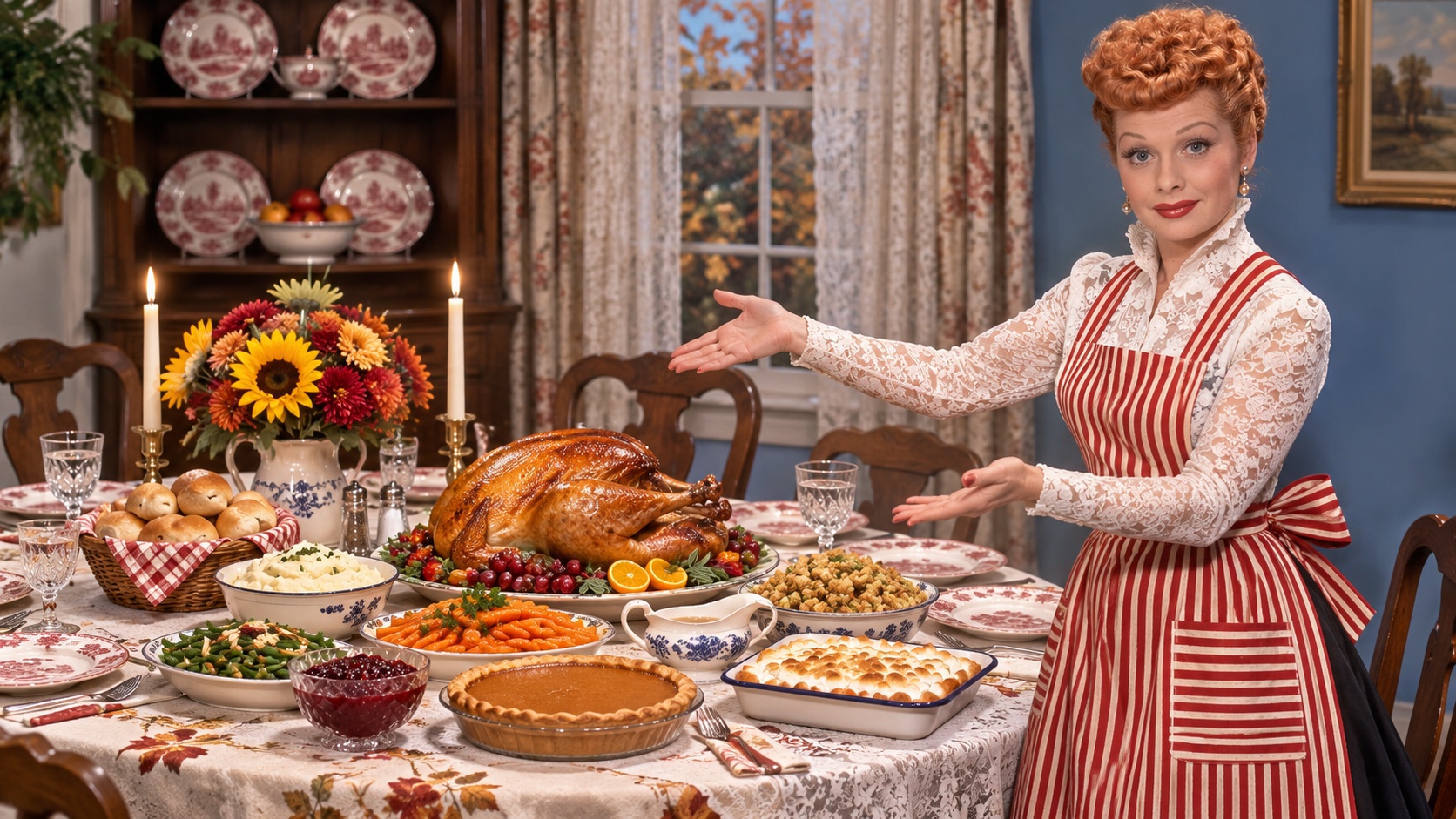
Cover Image: AI-generated illustration of Lucille Ball in a Thanksgiving kitchen setting, created for Las Cruces Digest using a public-domain portrait as reference.
Many fans know the “Pioneer Women” episode of “I Love Lucy” where Lucy and Ethel overzealously knead a ball of dough and accidentally bake a loaf of bread the size of a sofa. The real-life Lucille Ball and husband Desi Arnaz — a quintessential 1950s showbiz couple — were far more capable in the kitchen than that comic disaster suggests.
The Lucille Ball and Desi Arnaz Papers, part of the collections of the Library’s Music Division, contain two cookbooks plus a cheerful jumble of loose recipes and notes — handwritten, typed or torn from magazines and newspapers — that demonstrate their skill with a skillet.

The Ball and Arnaz papers hold a jumble of loose recipes, notes and magazine clippings about cooking as well as their homemade cookbook in a volume labeled “Cash.” Music Division. Photo: Shawn Miller.
Their copy of “The Settlement” cookbook is peppered with handwritten notes by Lucille and Desi in the margins. Their own homemade, unpublished cookbook — in a volume emblazoned “Cash” — is filled with page after page of handwritten recipes for favorite dishes: stuffed bell peppers, light tea cake, persimmon cake, cheese blintzes.
Receive the latest stories in your inbox every day — FREE!
Lucille and Desi each have recipes specifically attributed to them in “Cash” and in loose recipes. Lucille, for instance, serves up “Chicken Breast Ala Lucy” — chicken coated with flour and seasoning then cooked with butter, olive oil and a lively mix of onion, parsley, green pepper, garlic, celery and lemon juice.
Desi offers up “Desi’s Paprika Steak.” He instructs cooks to crisp bacon and sauté it in bacon fat, along with vegetables and sauces — charmingly measured in amounts such as “teensy” and “poquito.” Desi adds a dusting of garlic powder, paprika and chili peppers, then marinates the steaks in soy sauce for only “a very short time!”
Both Lucille and Desi contribute “Sunday Night Special” recipes — essentially the same recipe with minor differences. Her version sautés sausage, green onions, green peppers and garlic cloves before adding rice and broth. His recipe — “Arnaz Rice-Sunday Nite Special” — substitutes in chicken breast. The cook puts rice and chicken broth on the stove, sautés almonds until brown, then sprinkles them atop the rice. It’s easy to imagine this was a common family meal, with Lucille and Desi gathered around the table with their children, Lucie and Desi Jr.
Lucille also whipped up an A-to-Z list of “Lucy’s things to know before starting a cookbook” that sparkles with practical wit: “L. Leftovers – a godsend,” “Y. Your personality showing in everything you do” and “Z. Zestful zig-zagging to make ends meet + enjoy life at the same time.” Others remind of the importance of considering “guests’ likes + dislikes” and of “rolling out the red carpet for your husband–your friends.”
Holiday tables were well-served, too: Baked ham, gingersnaps, two kinds of stuffing and pumpkin pie also make an appearance.
These cookbooks, notes and clippings provide insight into a lesser-known aspect of the personal lives of Lucille and Desi, one of the most famous couples in America in the decades following World War II, thanks to the enormous success of their groundbreaking sitcom, “I Love Lucy.”
Their collection in the Music Division includes photographs, correspondence and other biographical materials, mostly contained in 85 scrapbooks. It also contains orchestral scores and instrumental parts used from the 1940s until the 1960s by the Desi Arnaz Orchestra and additional clippings, business papers and other documents.
All of it a tasty treat for researchers and scholars, waiting to be explored.
You must be logged in to post a comment.